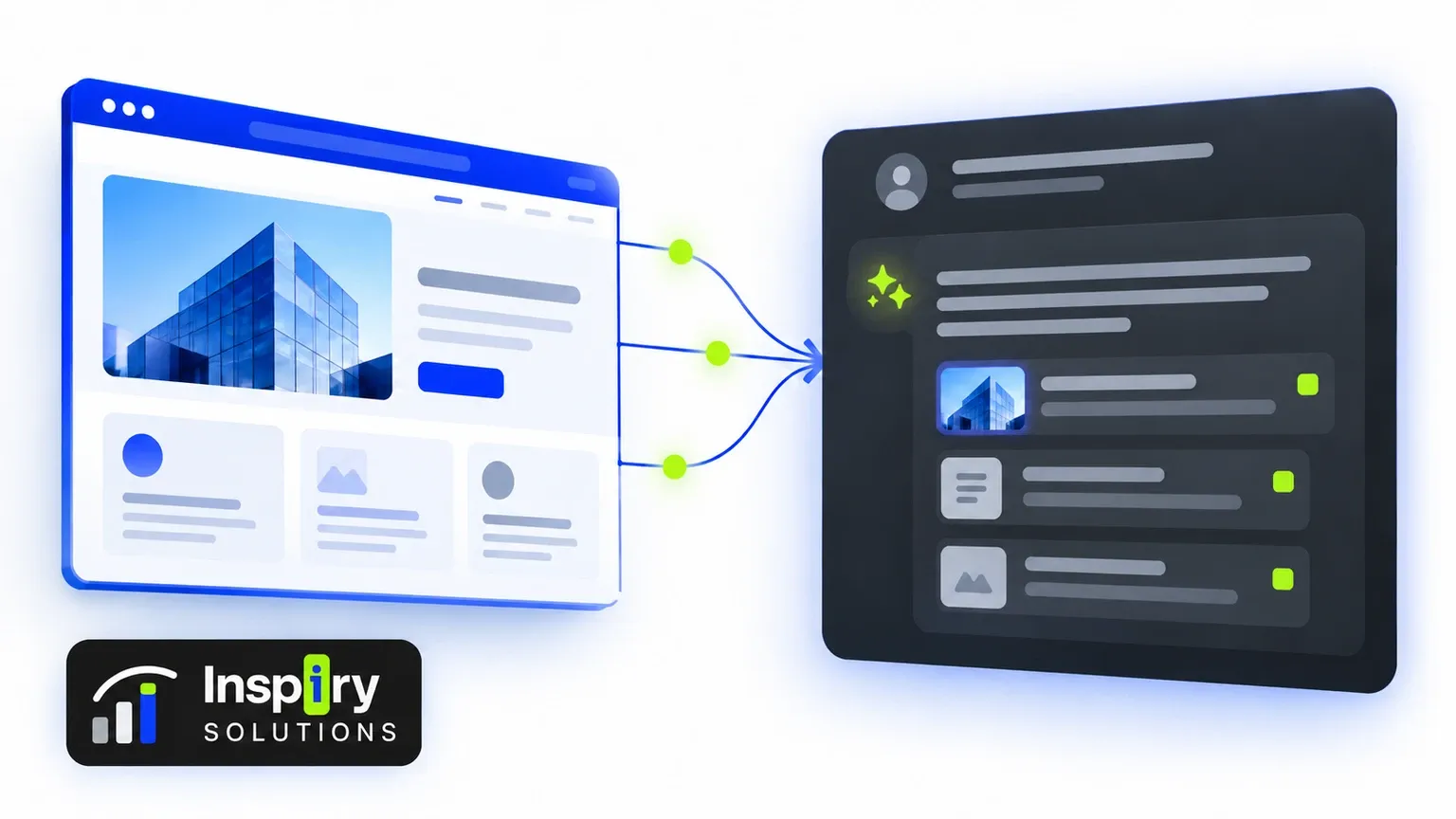
Entity SEO helps search engines and AI systems recognise your business as one distinct organisation by making its name, location, services and identity consistent across reliable sources. When another company shares your name, or an AI assistant describes you incorrectly, the problem may be unclear or contradictory information rather than poor rankings. Start with six verified business facts, publish them clearly on your website, align your structured data and online profiles, then test whether search results and AI descriptions become more accurate.
This guide is for business owners dealing with mistaken identities, outdated company information or confusion with similarly named organisations. You will learn which facts to establish, where they should agree and how to check improvements without expecting instant changes.
What entity SEO means for a business
An entity is a distinct thing that can be identified, such as a person, organisation, place or product. Entity SEO focuses on helping search systems distinguish that specific thing from other things with similar names or characteristics.
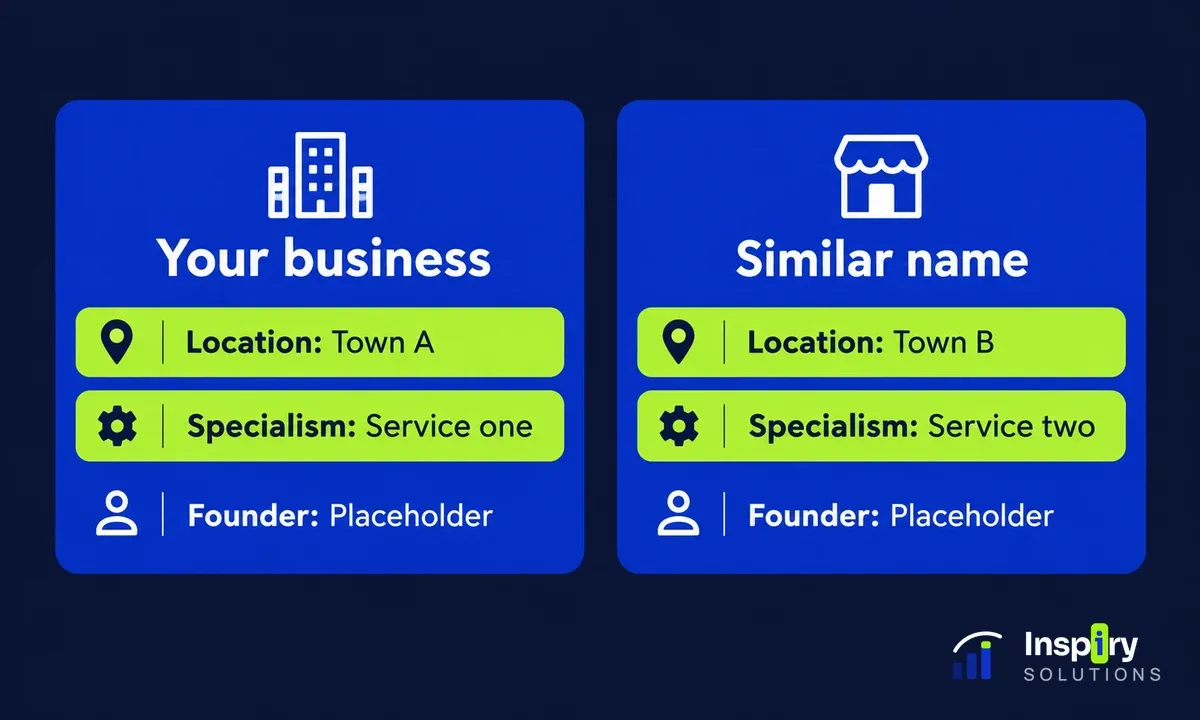
For example, two businesses can share the same name while operating in different countries. Their names match, but their locations, owners, services and websites may be completely different.
The practical objective is to establish a consistent business identity through information that can be checked across different sources.
A clear identity supports wider efforts to improve visibility. Our guide to steps to appear in AI answers explains how business information, useful content and accessible pages fit into that process.
Signs your business is ambiguous
Business identity problems often appear during ordinary searches. A customer searches your company name, but the results describe a different organisation or combine information from unrelated businesses.
Common warning signs include:
- An AI assistant attributes another company’s services to yours.
- Search results display an incorrect trading location.
- Your business is associated with an outdated founder or company name.
- Another organisation dominates searches for your exact name.
- A knowledge panel appears for a similarly named business.
- Different directories show contradictory phone numbers or addresses.
- AI answers mention a website or social account that you do not control.
Run a repeatable identity test
Write a fixed set of questions before making changes:
- What is [Business Name]?
- Where is [Business Name] based?
- What services does [Business Name] provide?
- Who founded [Business Name]?
- What is the official website of [Business Name]?
- Is [Business Name] the same company as [Similar Name]?
Ask several AI assistants the same questions. Record the date, exact wording, answer, cited sources where available and any errors.
Also search your company name, company name plus location, and company name plus main service in Google.
Our guide to testing what AI tools say about you explains how to organise these checks into a repeatable review.
If the findings reveal consistent identity confusion, an AI visibility service can help investigate contradictions across your website and external sources.
The important first step is diagnosis. Do not rewrite your website or create dozens of new listings before establishing which facts are actually wrong.
Build your fact sheet first: six facts to fix
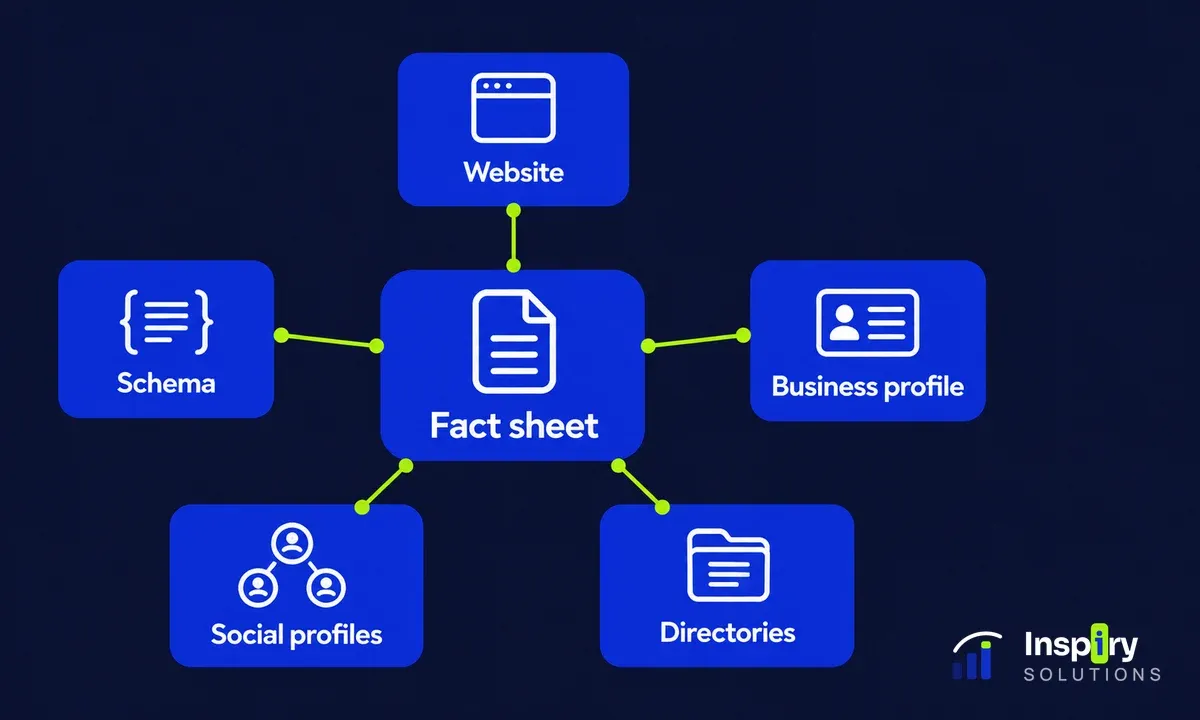
Create one internal document containing the verified facts that define your business. This becomes the reference for website copy, Organization schema, business profiles, directories and future updates.
Keep the document simple. Include each fact, its approved wording, an evidence source, the date verified and the person responsible for maintaining it.
1. Legal and trading names
Record the registered legal name and the name customers actually see.
These may differ. A limited company might operate under a shorter trading name displayed on its website, invoices and social profiles.
Identify which name belongs in customer-facing material and where the registered name should appear for legal identification.
If you previously traded under another name, record that relationship accurately rather than pretending the old identity never existed.
2. A one-sentence description
Write one sentence explaining what the business does, who it serves and its relevant location or market.
A useful structure is:
“[Business Name] is a [type of business] based in [location], providing [main services] to [target customers].”
Use wording that an unfamiliar customer could understand.
The description should be factual, specific and suitable for your About page and genuine business profiles.
3. Founding year and founders
Record when the business was established and who founded it, where these facts are public and verifiable.
A founding year can help distinguish organisations with similar names. Founder information can also clarify which company a profile or article describes.
Do not confuse incorporation dates with the start of trading if they differ.
If ownership has changed, describe the history accurately. A current director is not automatically a founder.
4. Locations or service area
Document the business’s actual location and the areas it genuinely serves.
Separate a physical office, registered address, remote operating location and customer service area where necessary.
A company operating remotely should not invent a local office to appear more relevant to a particular city.
For service-area businesses, identify the areas customers can actually receive services in.
5. Services
Write a concise list of your main services using terms customers recognise.
Separate current services from discontinued offerings, experimental products and services delivered by unrelated partners.
For example, a plumbing business offering installation and maintenance should not be described as a building contractor unless that accurately represents its work.
Keep the service descriptions consistent across major pages and listings.
6. Official profiles
Record the official website and the public profiles genuinely operated by the business.
These might include a Google Business Profile, LinkedIn company page, social accounts, professional membership listings and relevant industry marketplaces.
Include the exact profile URLs and who controls each account.
Remove unrelated accounts from your internal reference, even when their names resemble yours.
Do not present profiles belonging to employees, partners or similarly named companies as official company accounts.
Make the website the clearest source
Your website should explain your business identity without requiring visitors to piece together details from several pages.
Start with the homepage and About page. A customer should quickly understand the official name, business type, location, main services and the people or organisation responsible.
An About page should include the verified one-sentence description, relevant history and factual distinguishing details.
Google’s guidance on creating helpful, reliable, people-first content encourages clear information about who creates content and why it exists.
Use Organization structured data carefully
The Organization type defined by Schema.org includes properties for identifying an organisation, such as its name, website, description, contact details and related profiles.
Google’s Organization structured data documentation explains that suitable markup can help Google understand administrative details and distinguish organisations in search results.
Useful properties may include name, url, description, logo, address and sameAs, depending on what genuinely applies.
The sameAs property can identify authoritative profiles representing the same organisation.
Use only URLs belonging to your actual business. Linking an unrelated account can introduce precisely the confusion you are trying to remove.
The markup must reflect truthful business information and agree with the relevant visible content.
Google’s introduction to structured data explains how standardised markup helps classify page information.
Adding markup is not sufficient by itself. Check the rendered page and structured data output after implementation.
On WordPress, inspect whether your SEO plugin or theme already generates Organization markup before adding another implementation.
Make distinctions explicit
If another company shares your name, add natural distinguishing details.
For the hypothetical business in the example below, an About page might state:
“Northgate Plumbing is a plumbing and heating business serving Leeds and surrounding areas.”
That sentence identifies the business more clearly than “Northgate Plumbing provides exceptional solutions.”
You can also clarify what your business actually specialises in and where it operates.
Avoid aggressive comparisons, accusations or repeated references to the other organisation.
Align the profiles and listings that describe you
After updating the website, review the main external sources that represent your organisation.
These may include business profiles, social networks, professional bodies, industry directories and marketplaces.
Fix contradictions before creating new profiles.
Profiles you control
Start with accounts where you can directly edit business information.
Check the displayed name, website address, description, location or service area, phone number and listed services.
For your Google Business Profile, follow keeping your Google profile accurate to review business information and avoid unsupported details.
Listings others control
Some directories import information automatically or allow businesses to suggest corrections rather than edit listings directly.
Create a short correction record containing:
- The listing URL and current incorrect information.
- The verified replacement information.
- Evidence supporting the requested correction.
- The date you contacted the publisher.
- Whether the correction was completed.
Contact the publisher through its normal correction process. Provide accurate evidence instead of making unsupported demands for removal.
Consistency checklist
Use this checklist after updating the website and before declaring the identity review complete.
| Fact | Website (about page) | Organization schema | Business profile | Social profiles | Directories |
|---|---|---|---|---|---|
| Business name | Approved trading name | Correct name | Official eligible name | Same recognisable name | Correct listing name |
| One-line description | Clear identity statement | Matching description if used | Same business meaning | Consistent short bio | Accurate summary |
| Address or service area | True operating details | Applicable address data | Correct eligible location or area | Accurate public location | No invented address |
| Phone | Current contact number | Matching telephone if used | Active business number | Correct contact details | Remove old numbers |
| Founding year | Verified history | Include only if supported | Check if field exists | Check public history | Correct any conflicting dates |
| Founder | Accurate public identity | Appropriate supported property | Check if relevant | Accurate public attribution | Correct mistaken identities |
| Services | Current service list | Consistent relevant description | Accurate categories and services | Matching specialisms | Remove unrelated services |
Every entry still needs to reflect reality.
Give them the same approved information rather than relying on informal instructions.
Handling a name clash
The practical challenge is helping customers and search systems distinguish two legitimate businesses.
Build identification around details that are both accurate and specific: location, specialism, founder, founding year and official website.
Do not copy the other organisation’s logo, visual identity or contact details. Never suggest an affiliation that does not exist.
Hypothetical example
Northgate Plumbing in Leeds discovers that several AI assistants describe a different Northgate Plumbing operating in another country.
The owner first records the exact prompts and incorrect answers, then creates a verified business fact sheet.
The approved description explains that Northgate Plumbing serves Leeds, identifies its real plumbing specialisms and records its verified founding year.
Next, the owner updates the website’s About page and Organization schema so the business identity is explicit and consistent.
Official profiles are reviewed, incorrect directory entries are submitted for correction and unrelated profiles are excluded.
The owner repeats the original questions each month.
Over successive checks, some answers change while others continue showing outdated details. The owner records these differences rather than claiming that the corrections caused every improvement.
This hypothetical example illustrates the workflow, not a guaranteed result or measured case study.
When clarification is not enough
Sometimes a name clash creates broader problems involving customer confusion, trademark rights or commercial reputation.
Entity disambiguation SEO cannot resolve every legal or commercial naming dispute.
If customers repeatedly contact the wrong organisation, contracts identify the wrong company or the businesses operate in closely overlapping markets, seek appropriate legal and business advice.
A rebrand might eventually become an option, but it should not be the default response to one incorrect AI answer.
Checking progress without overclaiming
Measure whether the information presented about your business becomes more accurate, not whether every search platform follows your preferred wording.
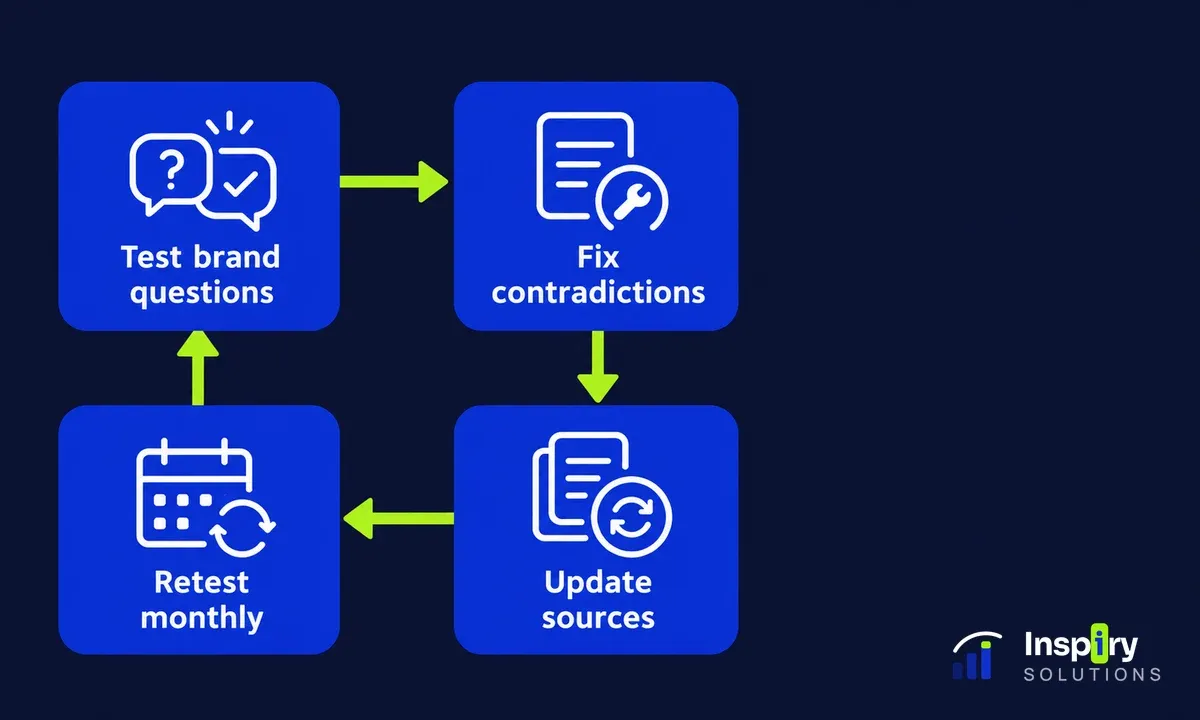
Repeat the same identity questions monthly, using the same prompts and recording which tools were checked.
Also record new mistakes. Improvements are not necessarily permanent, and answers can vary between tools or sessions.
Track what you can verify
Google Search Console can help you examine search queries associated with your website.
Review impressions and clicks for your business name, including relevant combinations of name, location and services.
Search Console does not directly measure whether an AI assistant understands your company correctly.
Use separate manual checks for AI descriptions and search result identity issues.
Maintain an implementation record showing which website pages, structured data fields and external listings were corrected.
Understand the limits
No provider can force Google to display a knowledge panel for a particular business.
Similarly, no one can guarantee that every AI system will immediately adopt updated business information.
The owner controls factual accuracy, website updates, legitimate profile corrections and testing. The owner does not control every generated answer.
A sensible progress report therefore distinguishes completed corrections from observed changes in third-party results.
If the same error persists, investigate the remaining contradictory sources before repeating changes that have already been implemented correctly.
Common questions
What is an entity in SEO?
An entity in SEO is a distinct thing, such as an organisation, person or place, that search systems can identify separately from other things. A business entity can be associated with its official name, website, location, services and other factual attributes. Recognition depends on those facts being consistent across your website, structured data and the external sources that describe you.
Do I need a Wikipedia page for entity SEO?
No. Most small businesses do not meet Wikipedia’s notability requirements, which rely on independent coverage, and should not try to create an article about themselves; Wikipedia’s conflict of interest guidance strongly discourages writing about your own company. Start by making information on your own website accurate, maintaining genuine official profiles and correcting credible external listings.
Does Organization schema make Google show a knowledge panel?
No. Google does not promise a knowledge panel because a business adds Organization markup. The markup helps Google understand organisational details and may support disambiguation or particular search appearances. Whether Google displays a knowledge panel depends on its own systems and available information, so treat accurate markup as clarification rather than a guarantee.
How long until AI tools describe my business correctly?
There is no published timetable that applies across AI tools. Individual systems may access different sources, refresh information at different times or continue making mistakes after corrections are published. Record the same questions and answers monthly, keep your website and genuine profiles consistent, and investigate persistent contradictions. Avoid treating one improved answer as proof that every system has updated.
My business shares a name with another company. Should I rebrand?
Not usually as a first step. Consistent distinguishing details, including your location, services, founder and official website, can help clarify which organisation customers are viewing. Start by correcting inaccurate descriptions and checking whether confusion persists. Rebranding is a wider business decision involving legal, commercial and customer considerations, not something entity SEO alone can determine.
Start with the fact sheet
Begin by documenting the six verified facts that define your organisation. Use them to update the About page, check Organization schema, correct official profiles and request changes to inaccurate third-party listings.
Then repeat your original search and AI questions monthly.
Do not measure success by how many mentions or profiles you create. Focus on whether genuine public sources identify the right business with accurate information.
If AI tools or search results mix your business up with someone else, send your URL for a free audit. Our AI visibility service builds the fact sheet and fixes the sources in order.