A website subscription is a recurring plan for website delivery or ongoing care instead of buying all the work as one fixed project. The scope varies: some include an initial build; others cover improvements only. For illustration, $1,499 a month totals $17,988 over twelve months before extras. This guide explains when continuing capacity earns that fee and which terms to check before subscribing.

The three ways businesses buy websites
A business can commission a fixed-scope project, hire a freelancer for defined work, or choose a website subscription for continuing capacity. Neither the provider’s size nor its billing model determines quality. Compare the actual scope, people available and arrangements for supporting the site after launch.
Sites are not finished at launch. They may need campaign pages, content changes, security updates and performance work. A fixed project can include a separate support agreement; a subscription can combine these tasks if its terms say so. The question is how much continuing work you need and how predictably it can be delivered.
What a website subscription includes
A serious subscription plan gives you a development team on retainer: you submit requests, they get built at a steady, defined pace, and the site stays maintained. At minimum it should include:
- Defined active request capacity and a visible queue.
- The design, development and review work included.
- A specific ongoing-care task list, where offered.
- Response targets distinct from delivery estimates.
- Written ownership, licensing, account access and handover arrangements.
Website subscription vs. agency quote vs. freelancer
| Check | Website subscription | Fixed project | Freelancer |
|---|---|---|---|
| Initial payment | Monthly fee; setup fees may apply | Agreed deposit and milestones | Deposit or agreed billing cycle |
| Changes | Within capacity and scope | Included revisions or separate change orders | Agreed tasks and availability |
| Maintenance | Only if expressly included | Included period or separate care plan | Only if agreed |
| Cancellation | Notice period and minimum term apply | Contract and completed milestones apply | Agreed notice and handover |
| Best fit | Predictable continuing work | Defined build and acceptance | Focused tasks with suitable capacity |
The 12-month math on a website subscription
Consider a hypothetical website subscription at $1,499 a month: twelve payments equal $17,988. That is useful arithmetic, not a typical market price or a promise about output. Compare it with a written project quote plus equivalent maintenance, licences and changes. The cheaper model depends on the work actually delivered, not the payment frequency.
The website subscription spreads payments and can reduce repeated quoting. It does not automatically move risk to the provider: a minimum term, slow queue or restricted handover can leave the buyer exposed. For a site that stabilises after launch, later payments may buy less useful work unless the scope adapts.
When a website subscription is the wrong choice
An honest provider will say the model does not fit everyone. A subscription is the wrong choice when:
- You need one site, once, and it will rarely change. A brochure site you touch twice a year is better bought as a fixed-price project with a defined scope.
- You have in-house developers and only need occasional overflow capacity. A freelancer or a short contract fills that gap more naturally.
- You are buying a large one-time replatform with a hard deadline and a budget approved by procurement. That is a project engagement with milestones, not a monthly queue.
Why Inspiry moved from subscriptions to one-time fixed pricing
We know this model from the inside, and we stopped selling it. Watching the 12-month math play out across real clients, most did not need a perpetual build queue. They needed a defined build done well, then steady care. So Inspiry now prices every build as a one-off project, scoped individually with the price agreed before work starts. The ongoing-life problem that subscriptions rightly identified is priced on its own: a maintenance plan from $99 a month covering updates, backups, security, and small changes. Our guide to what maintenance should cost breaks down that market tier by tier.
Separating the two numbers keeps each honest. You can compare the build against other build quotes, the care against other care plans, and stop paying build-money for months when all you needed was upkeep.
Five questions to ask before signing any plan
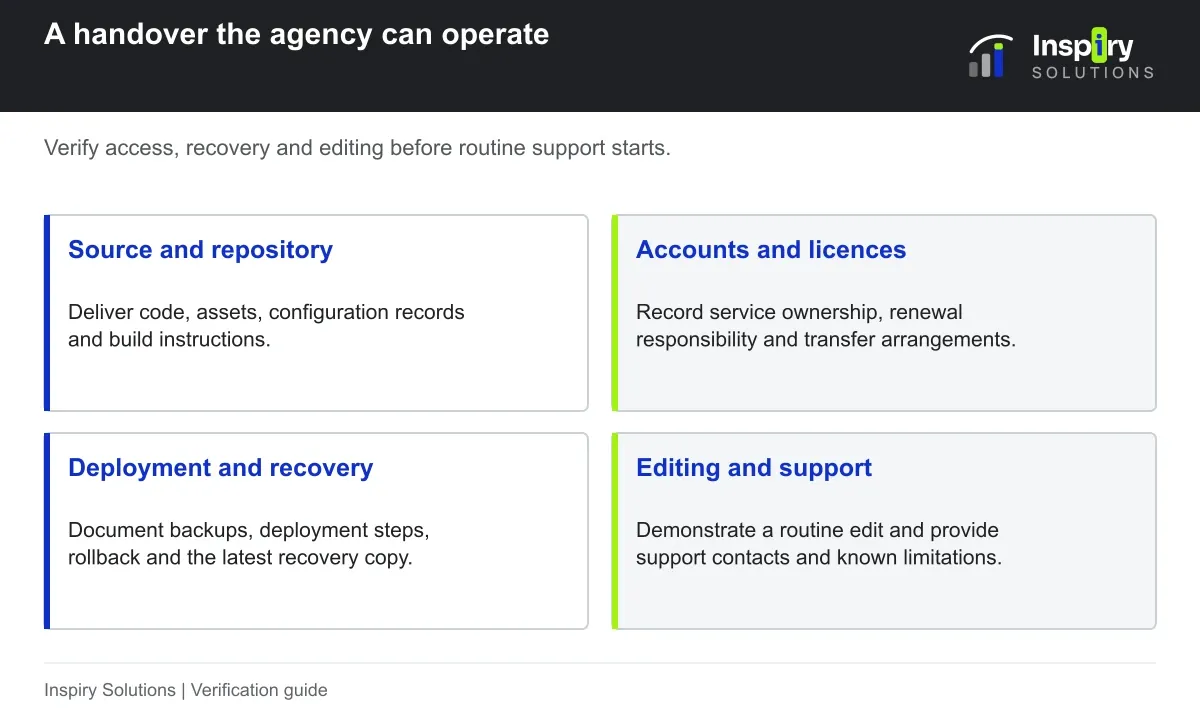
- Which code, content and accounts will you control, and when?
- What transfers on cancellation, including third-party licence restrictions?
- How many requests are active, and what affects turnaround?
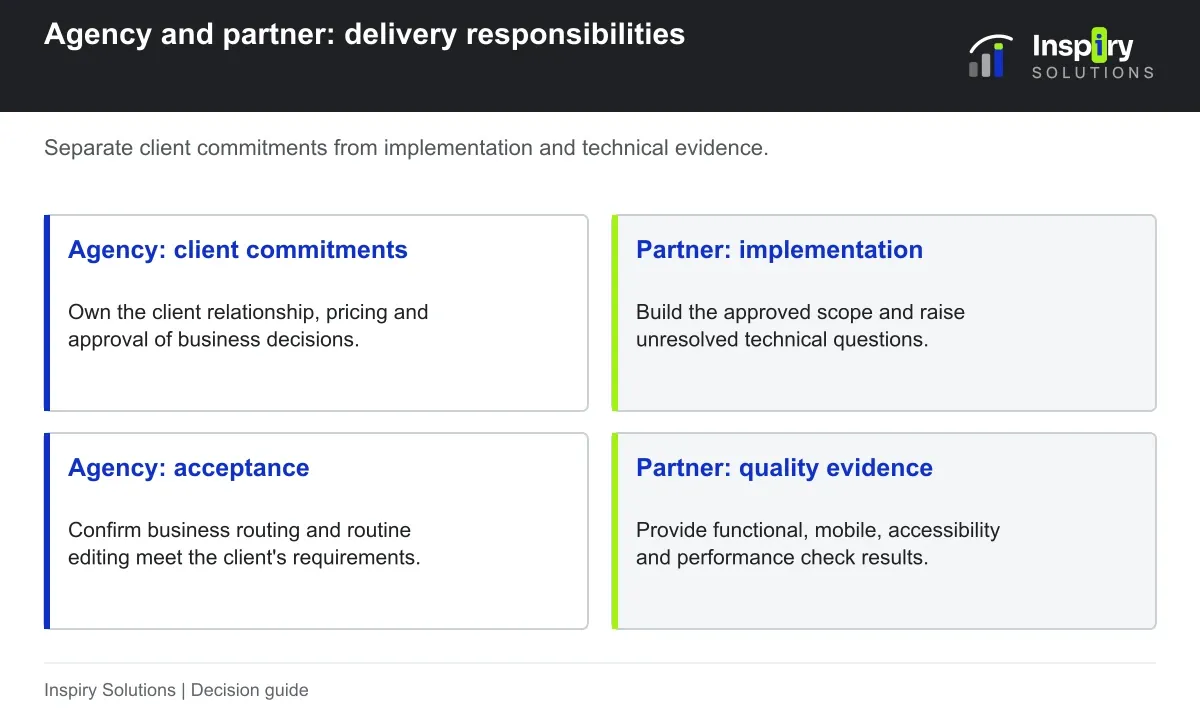
- Who scopes, implements and checks the work?
- Which care tasks are included and which are separately billed?
These questions help compare providers without assuming that one billing model is inherently better. Choose a website subscription or fixed project on its written responsibilities and demonstrated delivery, not a promise of unlimited work.
Seven website subscription checks for a workable agreement
A website subscription is only comparable when the actual delivery rules are visible. Use these seven checks to turn a monthly headline into a realistic work plan.
- Name the starting point. Is the initial build included, or must a functioning site already exist? Record the pages, integrations and content the first release will contain.
- Define active capacity. A website subscription might allow one request at a time. Ask how a complex request is split and whether review waiting time blocks the next task.
- Clarify the request size. A text change and a booking integration are not equivalent tickets. Ask for example estimates and the process for work outside normal capacity.
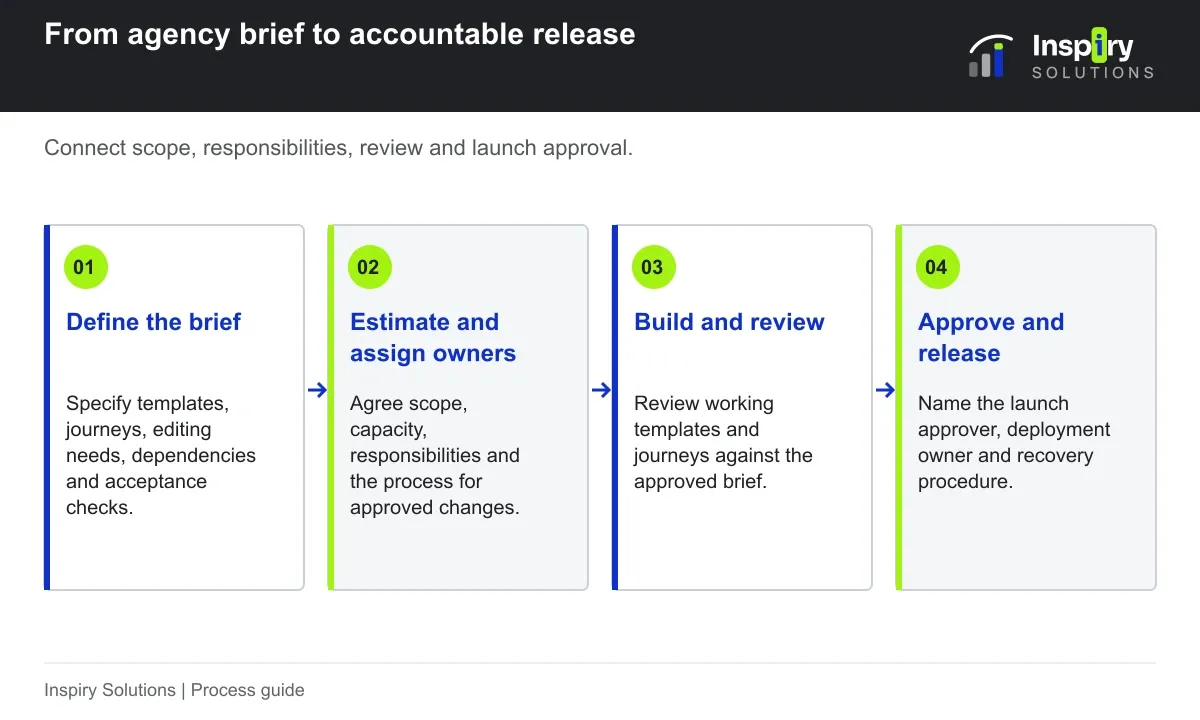
- Assign approval. Nominate one business decision owner. Record who supplies content, reviews work and authorises release so the queue does not stall on conflicting feedback.
- Price the full year. Include setup, hosting, licences and excluded tasks. Add expected request volume rather than assuming every month will need the same effort.
- Make care explicit. List update, backup, incident and monitoring tasks separately. A website subscription for design capacity is not automatically a maintenance service.
- Test the exit. Establish notice, minimum term, source handover, exports and account access. Ask what happens to incomplete work and licences when the service ends.
How to evaluate a website subscription using one real request
Pick an upcoming task, such as a service-page update with a form change. Write a short brief, the inputs you will supply and the result you expect. Ask each provider to explain its estimate, review process and acceptance checks against that same task.
Then follow the request through delivery. Did the provider ask useful questions? Could you see what was waiting for approval? Did the published page match the brief and send the enquiry to the right place? This gives more useful evidence than comparing the word unlimited across sales pages.
For a WordPress implementation, WordPress describes its open-source features and ownership model. That does not override a service contract or a paid extension licence. The website subscription agreement still needs to say how the usable site and its dependencies transfer.
Compare partner capacity in the agency and freelancer guide, and use the website cost checklist for a like-for-like budget. Neither a monthly plan nor a fixed project should hide responsibility for launch testing.
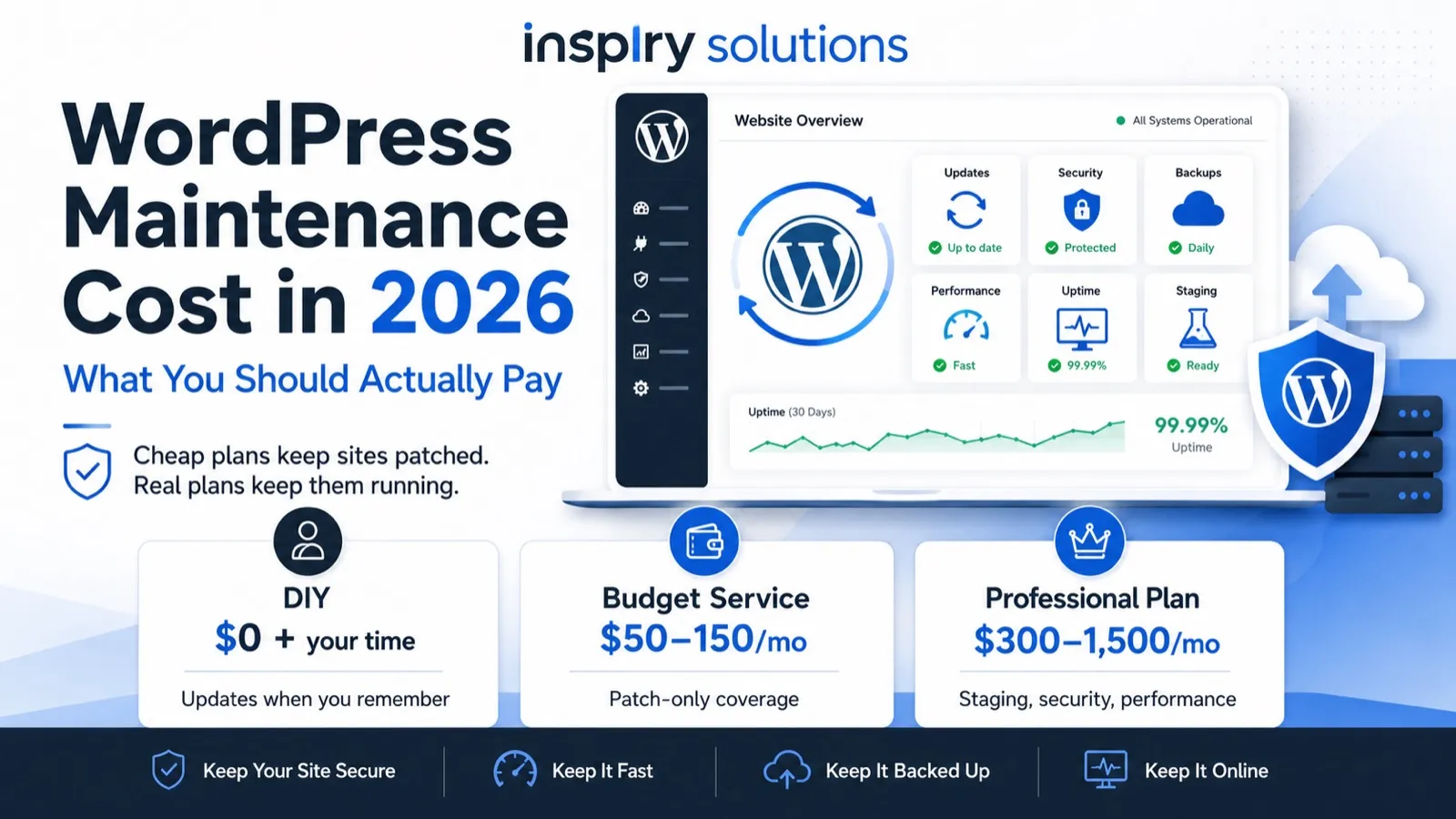
If you are comparing ongoing plans, our guides to WordPress maintenance cost and website costs in 2026 give typical ranges.
Common questions
What is a website subscription?
A website subscription is a recurring service for a defined amount of website work or care. Check whether it includes an initial build, continuing improvements, maintenance, or only one of those. The request queue, delivery capacity and ownership terms should be explicit.
Is a website subscription cheaper than hiring an agency?
Not automatically. A website subscription at an illustrative $1,499 a month costs $17,988 over twelve months before extras. Compare equivalent delivered work, ongoing services and second-year needs. A stable site may suit a fixed build and separate care; frequent planned changes may justify continuing capacity.
Do I own my website on a subscription plan?
Ownership depends on the agreement and third-party licences. Ask which source files, content, accounts and exports you receive, when they transfer and what happens on cancellation. Do not assume a monthly payment grants unrestricted rights to every component.
Can a website subscription handle urgent changes?
Check the agreed support hours and priority process. A routine request queue may not provide emergency response. Ask which incidents interrupt planned work and whether urgent delivery changes the price.
What happens to unused website subscription capacity?
The terms determine whether unused time expires, rolls over or is not measured in hours at all. Compare delivered results and active-request rules rather than assuming monthly payments create a bank of future development days.
Can I move from a website subscription to a fixed care plan?
Potentially, if the provider offers it and the site is ready for handover. Agree remaining work, licences, recovery access and support responsibilities. A build queue and routine maintenance are different services with different acceptance criteria.
Your next step
Choose a website subscription only when continuing delivery earns its fee. Compare the same work over a full year, then make ownership, capacity and exit arrangements explicit.