Website cost combines design, development and the running expenses after launch. Scope, content and integrations matter more than a label such as small-business site. This guide uses indicative planning budgets in US dollars, not market averages, then gives seven checks for making quotes comparable.
Why website quotes vary 10x for the same brief
Ask five providers what a website costs and you will get five numbers spanning a 10x range. That is not because four of them are lying. “A website” is a category, like “a vehicle,” and nobody blinks when a scooter and a truck carry different prices. Three variables drive almost all of the spread:
- Scope. A five-page brochure site and a forty-page site with booking, search, and three languages are different projects wearing the same name. Until scope is written down page by page, every number is a guess.
- Who builds it. A student freelancer, a senior independent developer, a small studio, and a 50-person agency have very different cost structures. You are paying for experience, overhead, or both, and it is worth knowing which.
- What is included after launch. Some quotes end at launch day. Others include hosting, maintenance, and revisions for a year. Two identical-looking totals can differ by thousands once you price the second year.
Website cost in 2026 by project type
These are illustrative planning ranges, not a survey or a rate card. A project can fall outside them depending on location, scope, content readiness, delivery model and support. Ask providers to quote the same written brief.
| Project type | Illustrative planning budget | Main work |
|---|---|---|
| DIY builder | Current supplier plan plus your time | Content, configuration and ongoing administration |
| Theme-based business site | $2,000-8,000 example range | Configuration, content, integrations and testing |
| Custom business site | $8,000-25,000 example range | Design, templates and editorial workflows |
| Custom commerce | $15,000-60,000 example range | Catalogue, integrations and purchase journeys |
| Web application | $30,000-150,000+ example range | Accounts, data, business logic and engineering |
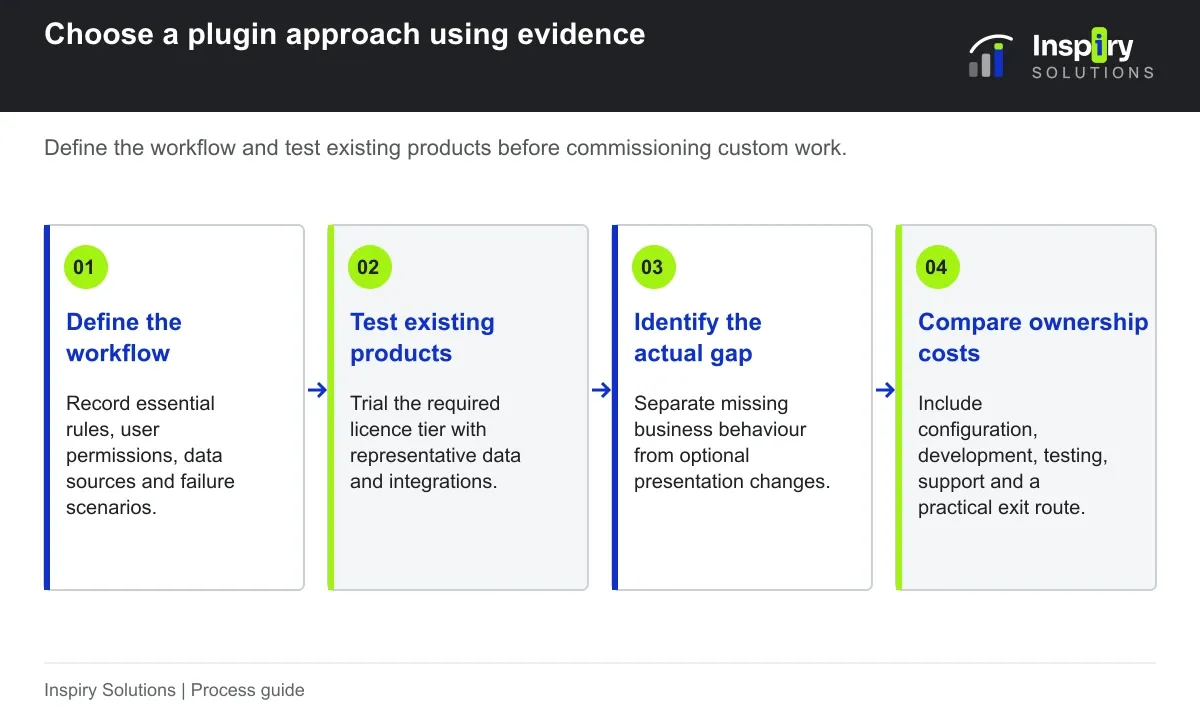
The work changes with the requirements. A theme-based site can still need careful design, content modelling and integration testing. A custom site is not automatically better value. Website cost becomes meaningful when the proposal identifies which work solves your actual problem.
What moves a website quote up or down within a range
Projects inside a tier still differ, which is why the ranges are wide. Four things reliably push a quote toward the top:
- Integrations. Every system the site must talk to (CRM, booking, payments, inventory) adds work and testing. One integration is a line item; five are a project.
- Content volume. Ten pages and eighty pages are not the same site, even on the same design. Migrating old content adds more.
- Custom functionality. Anything with the word “calculator,” “portal,” or “dashboard” in it moves you toward the next tier up.
- Deadlines. Compressed timelines cost money everywhere, and websites are no exception.
The bottom of a range usually means the opposite: few pages, no integrations, finished content in hand, and a flexible launch date. If that describes your project, say so. It is worth real money.
The hidden line items website quotes leave out
The sticker price is where budgets start going wrong, not where they end. Four costs routinely sit outside the quote:
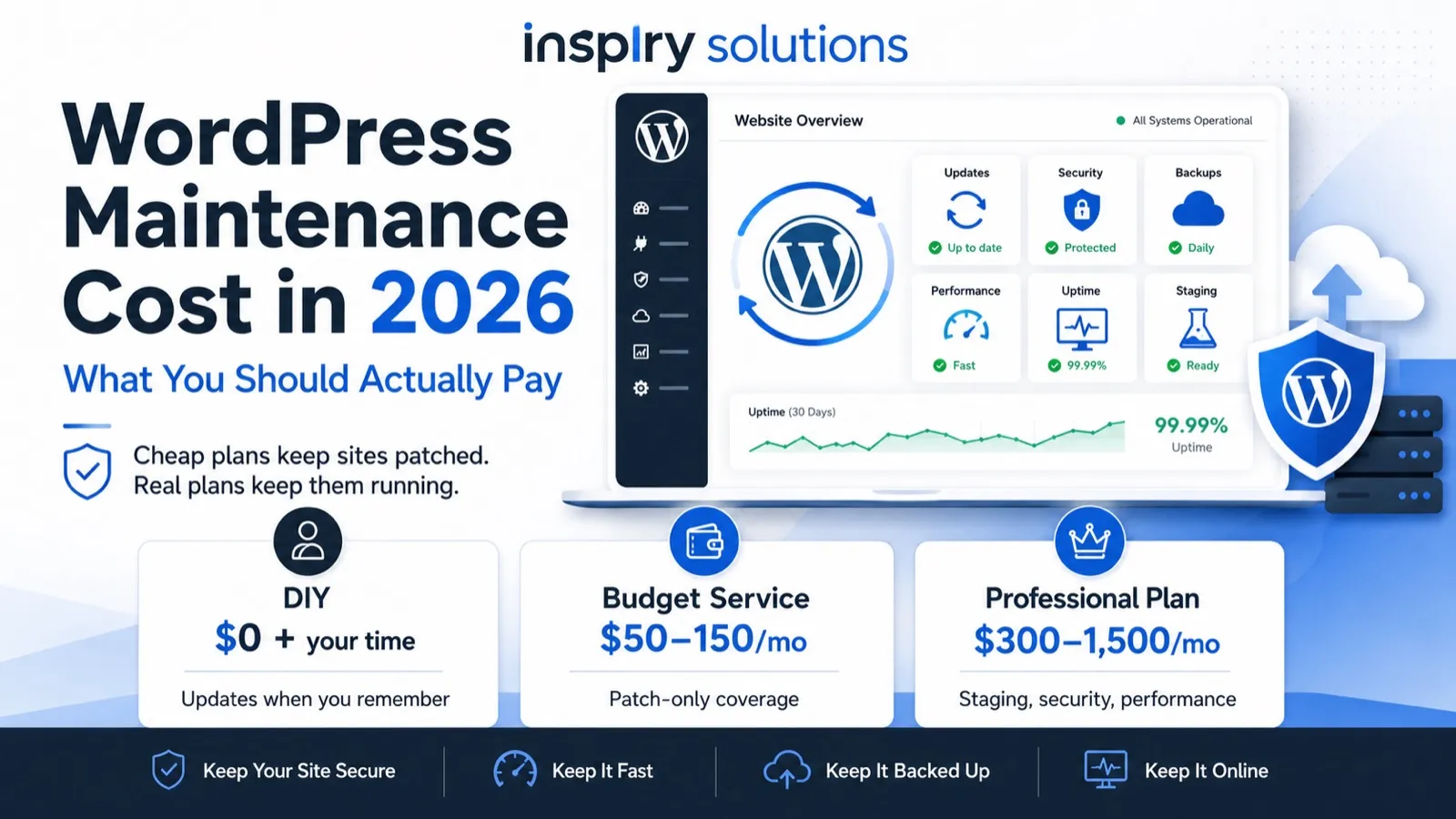
- Maintenance: define updates, recovery, monitoring and repairs. Our WordPress maintenance guide explains how to compare scopes.
- Licences and services: list hosting, themes, extensions, email delivery and external tools with renewal terms.
- Content: state who supplies copy, photography, translations and migration approval.
- Revisions: specify included review rounds and the process for changes beyond the agreed scope.
How fixed-price web development changes the math
The alternative to a mystery quote is a fixed one. At Inspiry every project is scoped individually and the price is agreed before work starts: small WordPress sites from $1,200, most business websites $2,500-$8,000, and new Shopify stores $3,500-$12,000, with a typical build taking 4-8 weeks. Ongoing care is a separate, clearly priced maintenance plan from $99 a month rather than a number hidden inside the build.
Some providers sell the whole arrangement as a flat monthly fee instead. That model has real trade-offs of its own, and we cover them in our explainer on website subscriptions.
Five questions that make any website quote comparable
- What exactly is in scope? Ask for pages and features listed, not described. “Modern responsive website” is not a scope; “9 pages, blog, contact form, two integrations” is.
- Who does the work? The person quoting, or someone cheaper you will never meet? Seniority is most of what you are paying for.
- What does the second year cost? Hosting, licenses, maintenance, and typical changes. If they cannot answer, they have not thought past launch.
- What is the revisions policy? Rounds included, and the rate after. This is where cheap quotes recover their margin.
- Who owns everything at the end? Code, content, accounts, domain: in your name, unconditionally. Any hedge here is a reason to walk.
Ask all five and the quotes stop being darts. A $6,000 number and a $20,000 number for the “same site” usually turn out to be different scopes, different seniority, and different second years. Now you can see which difference you are paying for. The price of a website is not a secret; it is just never one number.
Seven website cost checks for comparable proposals
A useful website cost review starts with the same written brief for every provider. These seven checks expose differences before the project becomes a sequence of extra invoices.
- Count templates and content separately. Twenty pages may use three layouts, but writing and approving twenty pages still takes work. Specify page types, content volume and who supplies each item.
- Describe the customer tasks. Include enquiries, purchases, account access and bookings. Website cost depends on what must work, not just what must look attractive.
- List integrations. State the systems, data directions and failure handling required. A CRM connection needs field mapping, access arrangements and a test of the resulting record, not merely an installed plugin.
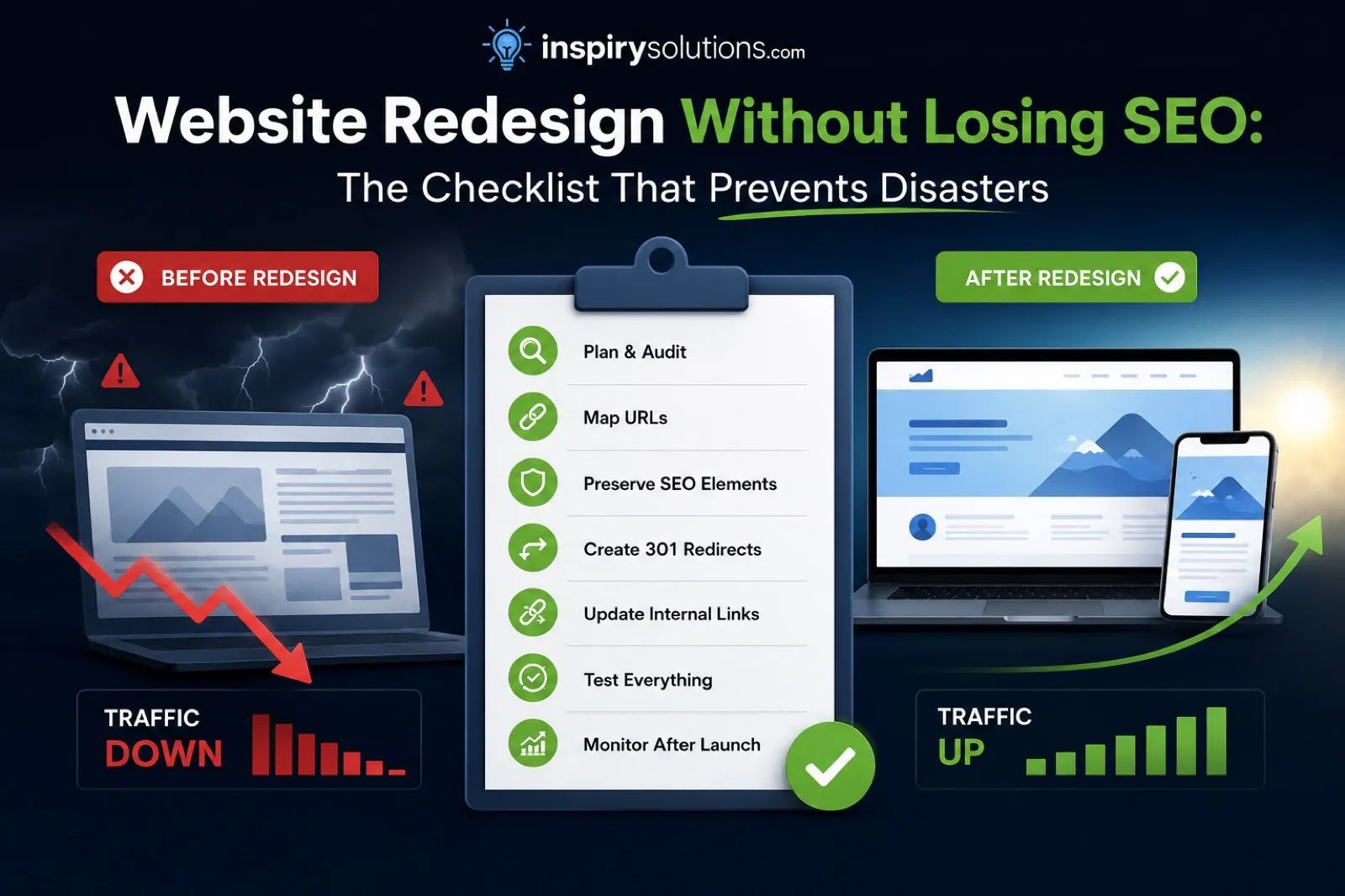
- Agree migration scope. Include useful old URLs, media, metadata and redirects. Decide who checks the imported output and which historical records are outside scope.
- Specify acceptance. Name the mobile, editing, accessibility and journey checks expected before payment milestones. A website cost quote should include verification time.
- Price the operating year. Record hosting, licences, renewals, care and likely changes. Separate business-owned subscriptions from the provider’s implementation fee.
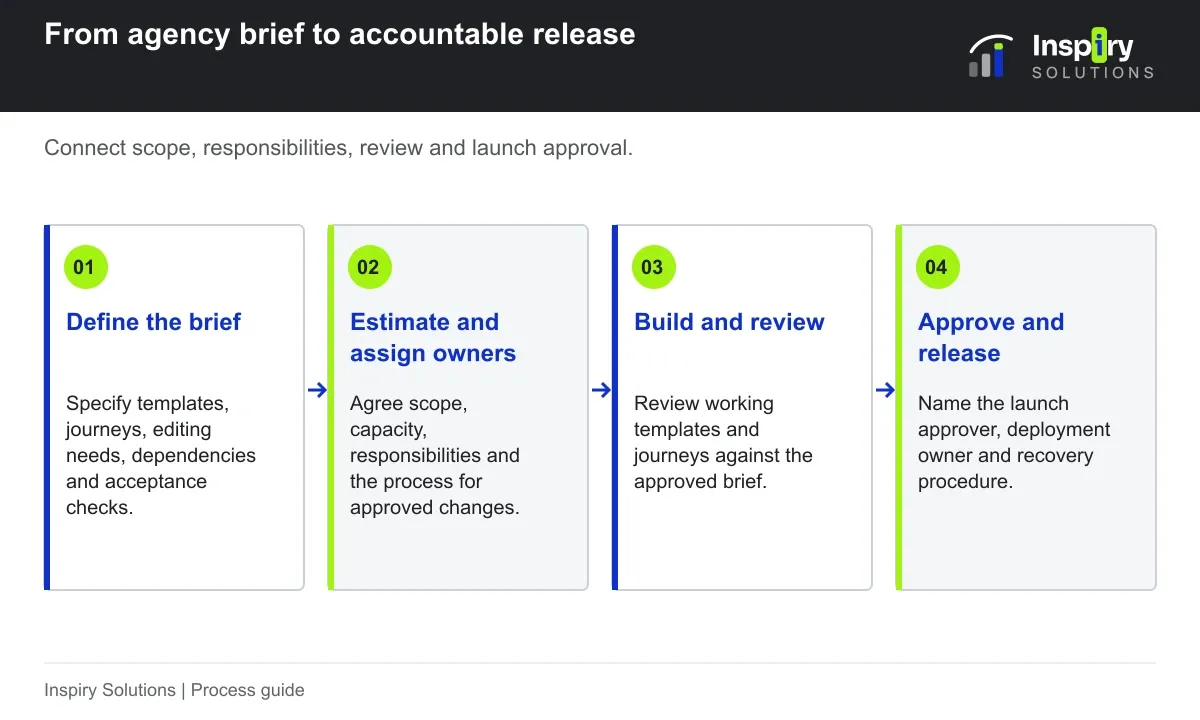
- Define change control. Agree how a new requirement changes time and price. A fixed project is only fixed while the approved scope remains clear.
Use a worked scope, not a website cost average
Consider a business needing a homepage, three service layouts, a case-study library and an enquiry form connected to its CRM. The brief should state who writes the pages, what happens after submission and how staff publish another case study. Providers can then quote the same deliverables.
If one proposal includes content writing and CRM testing while another excludes both, their totals are not comparable. Add the missing work before deciding which website cost is lower. The same applies to renewal licences, migration and training.
For a commerce brief, use Shopify’s current pricing to verify the platform component rather than a remembered plan price. A plan fee still does not cover every app, payment or implementation expense.
Use the delivery-partner comparison to assess capacity and the redesign checklist when old routes need preserving. Website cost is easier to control when responsibilities and evidence are visible together.
Before you request quotes, read what to prepare before you hire a WordPress developer. For the build itself, see our WordPress development service with fixed quotes.
Common questions
How much does a website cost in 2026?
Website cost depends on the agreed work, not just page count. The ranges above are planning examples, not market averages. Compare a defined build, content responsibilities and ongoing expenses. Inspiry scopes projects individually; verify the current service quote rather than treating an example budget as a guaranteed price.
Why do website quotes vary so much for the same project?
Because they are rarely quotes for the same project. Three variables drive most of the 10x spread: scope (what is being built, page by page), who builds it (a junior freelancer and a senior team price the same brief very differently), and what is included after launch. Pin all three down in writing and the quotes become comparable.
Is a monthly website plan cheaper than paying for a build upfront?
Compare equivalent delivered work over the period you expect to use it. A hypothetical $1,499 monthly plan totals $17,988 over twelve months before extras. Continuing changes may justify that capacity; a stable site may suit a fixed build and separate care. Neither model is inherently cheaper.
Does website cost include writing and photography?
Only if the proposal lists them. State who supplies drafts, approvals, images and translations, and whether migration editing is included. Content readiness can affect both the price and the release date.
How can I reduce website cost without weakening the project?
Prioritise the customer tasks, use suitable existing components and phase nonessential features. Supply approved content early and keep one decision owner. Reduce scope deliberately rather than removing testing or recovery planning.
Should I compare website cost over one year or longer?
Use the period relevant to your decision and show renewal assumptions clearly. Include hosting, licences, maintenance and expected changes. A first-year discount or low build fee can conceal a different ongoing total.
Your next step
Compare website cost against a shared brief and a realistic running budget. A clear scope and acceptance checklist make the difference between an appealing quote and a workable project.