To learn how to rank in google maps, focus on three things: relevance, distance and prominence. Google uses these factors to decide which businesses appear in local results. You can improve your business categories, profile accuracy, website content and reputation, but you cannot control where someone searches from. The practical approach is to diagnose why competitors appear above you, fix the strongest gaps first and measure visibility from consistent locations. There is no guaranteed route into the top three.
This guide explains google map pack ranking factors for service business owners, what they control and the five checks to make before spending money on local SEO.
What the map pack is and why results differ by searcher
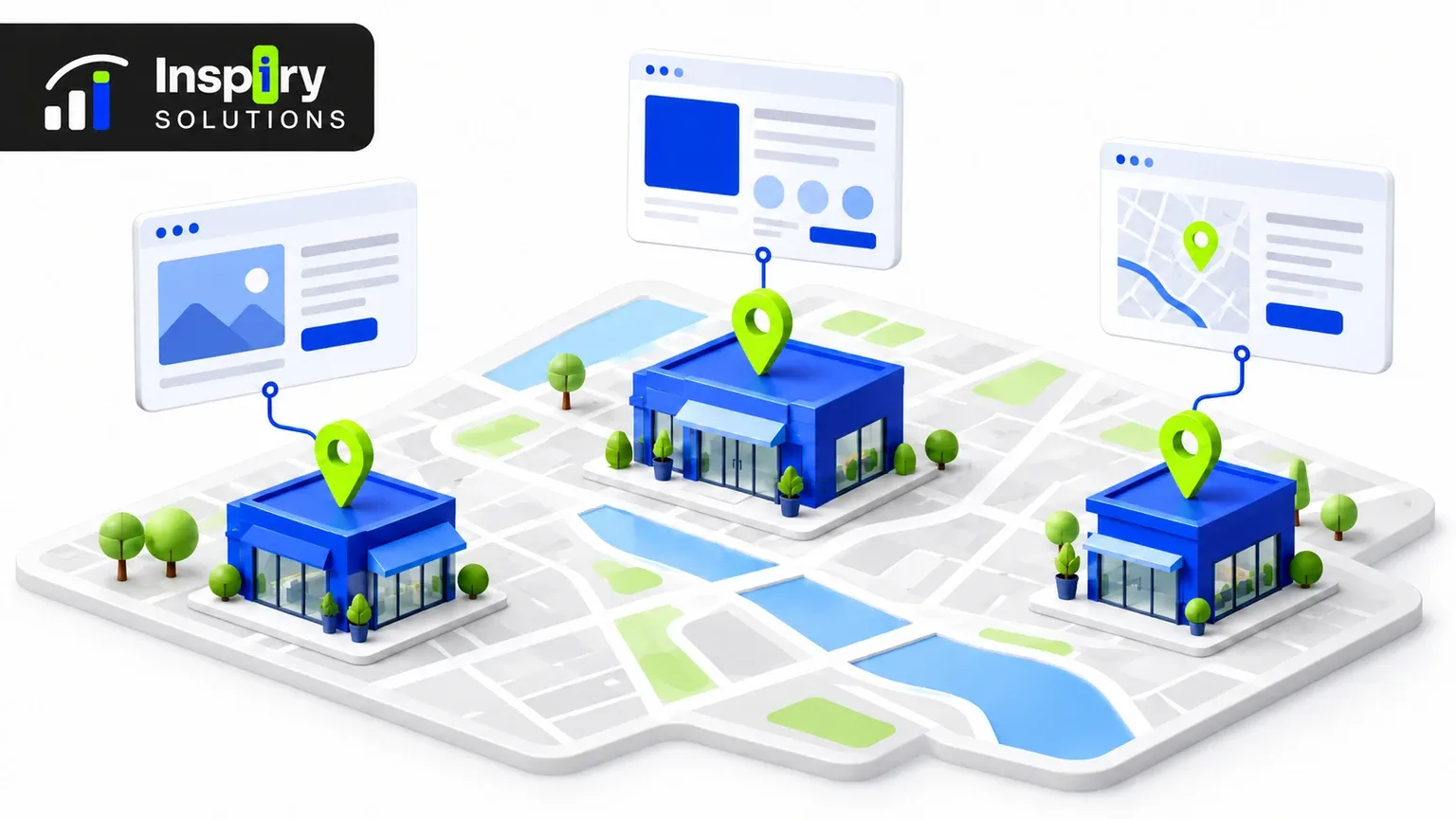
The map pack, also called the local pack, is the group of local business listings Google may display alongside a map for searches with local intent. It commonly features three businesses, although the layout varies.
Search for “emergency plumber” or “roof repair near me” and you may see listings with ratings, opening hours, contact options and directions. These differ from ordinary organic website results.
A business can have a strong website but limited map visibility. Another might appear prominently in the map pack without ranking particularly well in organic results.
Why two people see different businesses
Local results depend on where someone searches and what they type.
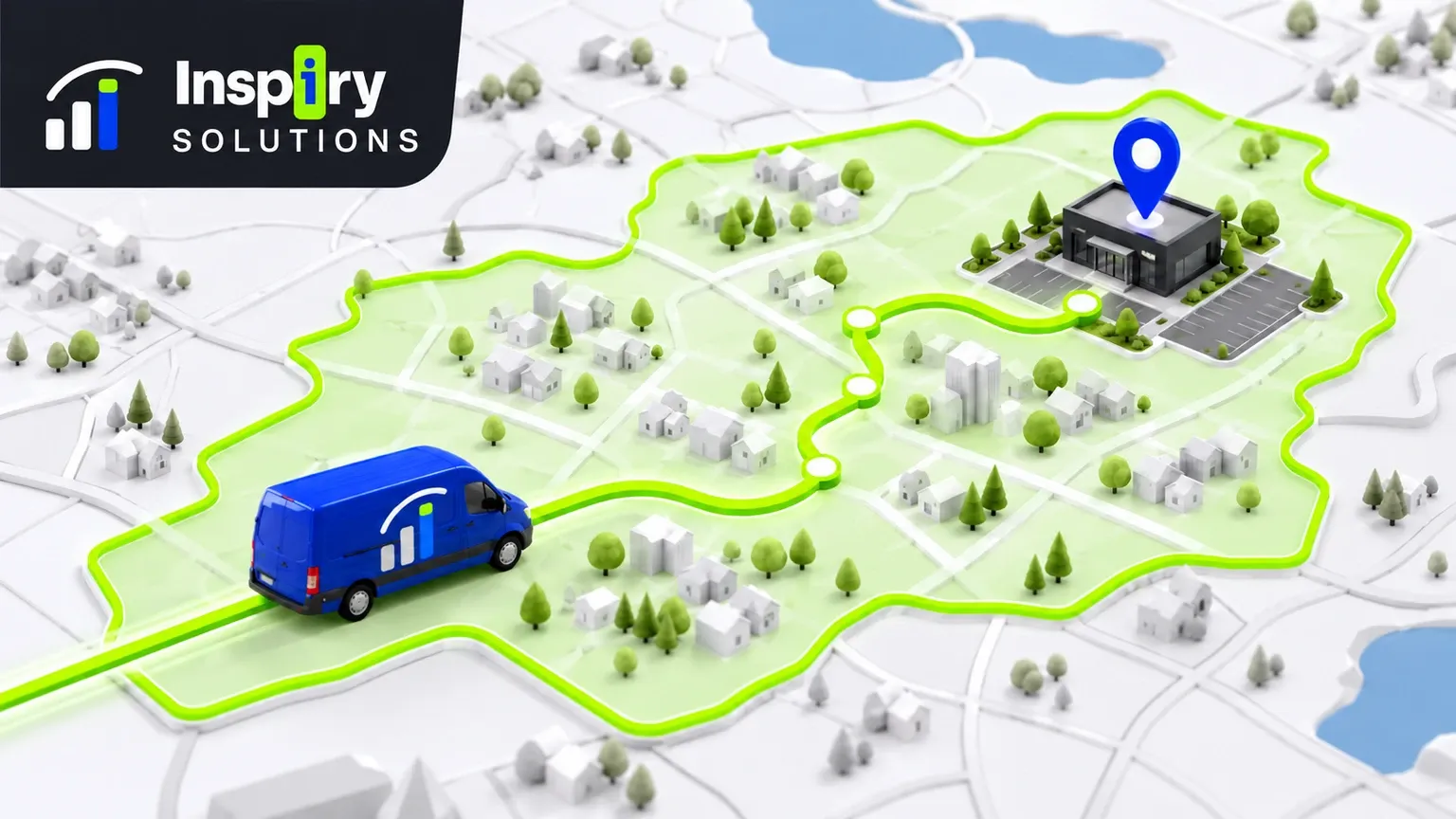
A customer searching “plumber” in the city centre may see different businesses from someone searching five miles away. The exact query and available location information also matter.
One screenshot from your office does not establish your ranking across an entire city.
If you are wondering how to get on google maps top 3, understand that there is no permanent top-three list. Aim for visibility across relevant searches in areas you genuinely serve.
No agency can guarantee those positions. Google does not offer a paid route to better organic local rankings.
Relevance, distance and prominence in plain English
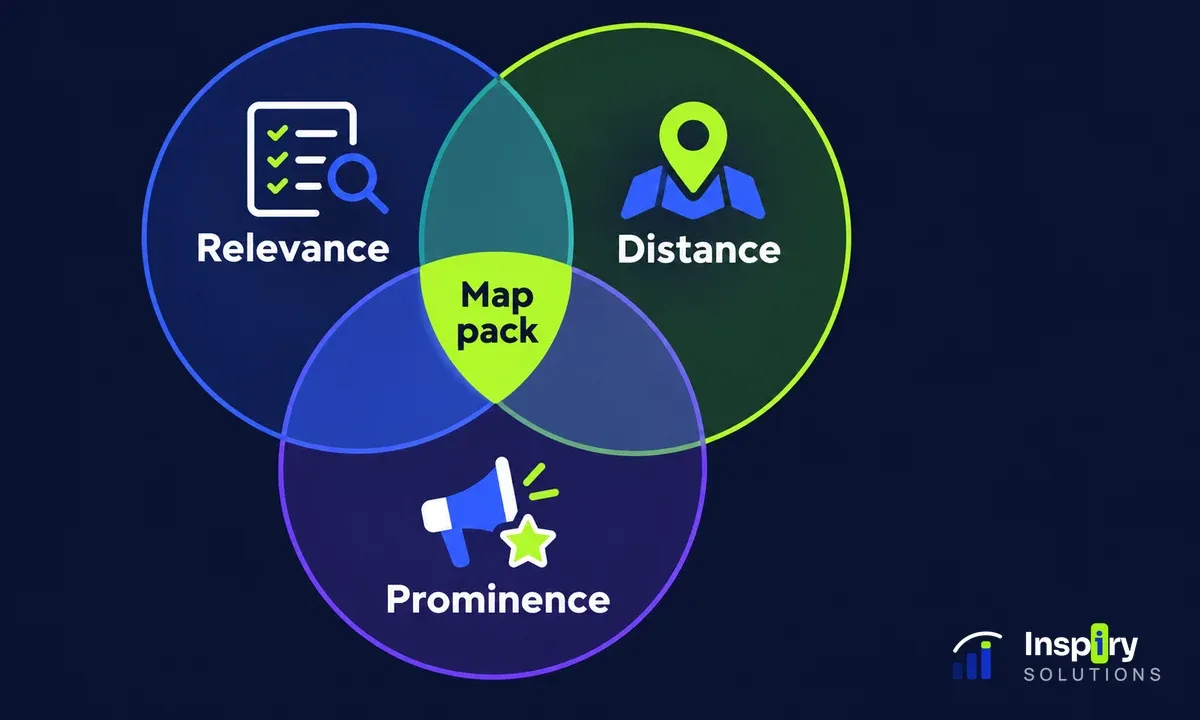
Google identifies three main factors influencing local results: relevance, distance and prominence, which its documentation also describes in terms of popularity.
Its official explanation of local ranking describes how these considerations work together.
Understanding them helps separate useful changes from limitations no agency can remove.
Relevance: does your business match the search?
Relevance measures how closely a business matches what someone needs.
A plumbing company categorised as a general contractor may be less specifically matched to plumbing searches than one using an appropriate plumbing category.
Your primary category, additional categories, services and accurate business profile information help Google understand what you offer.
Your website reinforces this through relevant content. A dedicated boiler repair page explains that service more clearly than a vague homepage.
Relevance is worth investigating first because much of the supporting information is within your control.
Distance: how close is the business?
Distance concerns how far a business is from the location associated with a search.
Google may use a named location, such as “plumber in Bristol”, or location information about the searcher.
You cannot make your business physically closer to every customer.
This particularly affects service-area companies covering multiple towns from one base. Adding those towns to your profile does not relocate the business or guarantee rankings there.
Website content can explain your coverage, but cannot eliminate geographical distance.
Prominence: how established is the business?
Prominence concerns how well known a business appears to be.
Google specifically mentions links from other websites, review count and positive ratings.
Local publications, industry organisations, relevant directories and genuine customer feedback can provide evidence of an established business.
However, prominence is not a setting you can directly increase. It develops through legitimate business activity, customer relationships and recognition over time.
Factor versus what you control
| Google factor | What it covers | What you can change | What you cannot change |
|---|---|---|---|
| Relevance | How closely the business matches the search | Categories, services, profile details and website content | Customer queries and Google’s interpretation |
| Distance | Proximity to the search location | Accurate location information and genuine service coverage | Searcher location, geography and competitor proximity |
| Prominence | How established and reputable the business appears | Genuine reviews, local mentions and earned links | Competitor reputations and Google’s weighting of signals |
Every proposed improvement should address an identifiable problem. If someone recommends a change without explaining which factor it supports, ask for evidence.
What you control and what you do not
Productive local SEO focuses on improvements your business can make legitimately.
You control your primary category, relevant secondary categories, listed services, opening hours, contact details and website content.
You can establish a process for requesting genuine customer reviews and replying to feedback.
Your business name, address and phone number should accurately represent the same organisation wherever they appear.
You cannot control where customers search, competitor density or how Google evaluates different signals.
Shortcuts that create bigger problems
Adding “Best Emergency Plumber London” to your business name when that is not your actual trading name is not legitimate optimisation.
Google’s business representation guidelines require names and addresses to reflect real-world business information.
Adding unnecessary keywords can trigger edits or suspension.
Using a virtual office or moving an address solely to manipulate rankings can create eligibility problems. Update your location only when your business genuinely moves to an eligible address.
Our local SEO service for service businesses examines the profile, website and local visibility before implementing changes.
How to rank in Google Maps: five checks in order
Before changing anything, establish a baseline.
Choose relevant search phrases and five representative points across your service area. Record the date, device, search location and businesses appearing in the top three.
Note where your listing appears or whether it appears at all.
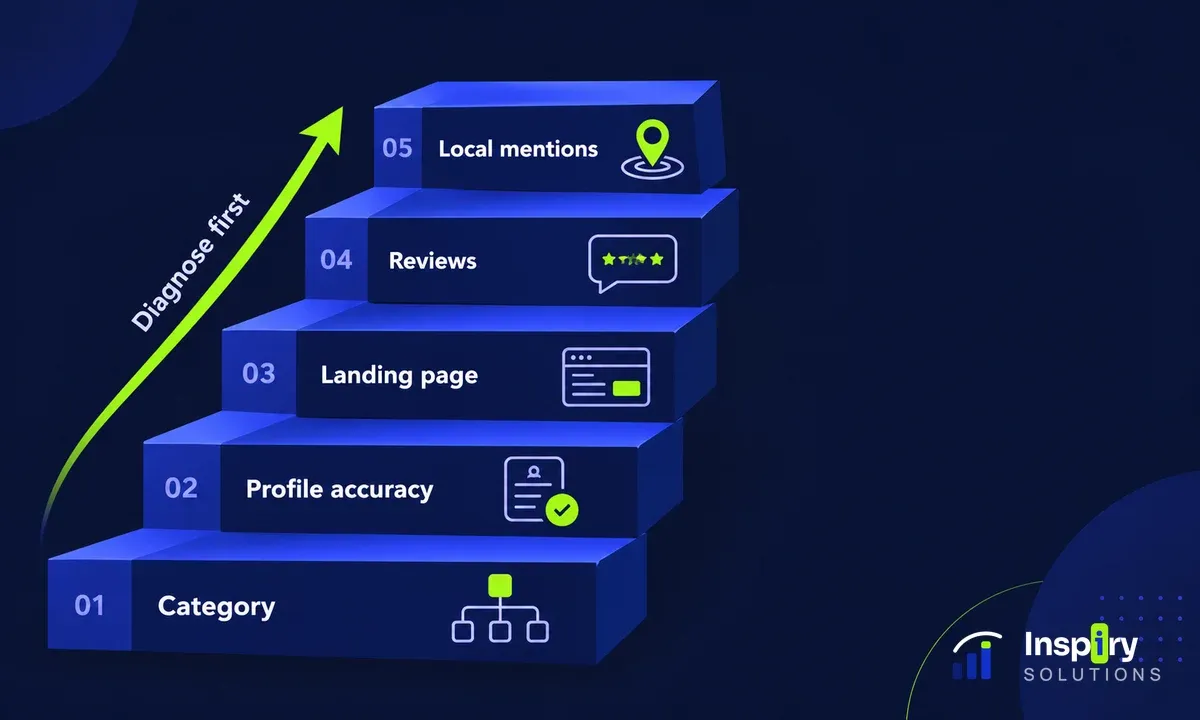
Then work through these five checks.
The order prioritises accuracy and relevance before longer-term reputation work. It is a diagnostic sequence, not Google’s published ranking formula.
1. Primary category and secondary categories
Start with your primary category because it defines your main business activity.
A plumber should not normally use “Contractor” if a more accurate plumbing category is available.
Choose the most specific category that genuinely describes your business.
Secondary categories should reflect additional activities you perform, not every keyword you hope to rank for.
Do not copy competitors’ categories without verifying their relevance.
Record existing settings before making changes. Avoid editing unrelated fields simultaneously because that makes comparisons harder.
What to check: Does your primary category describe your main service, and are the secondary categories justified?
2. Profile accuracy and completeness
Inspect your business profile as a potential customer would.
Check the trading name, address visibility, telephone number, website URL, opening hours and services.
Confirm ownership and verification arrangements. Review photographs and essential business attributes.
Accuracy matters more than filling every field with generic marketing copy.
An emergency repair company should communicate its real availability rather than claim round-the-clock service it cannot provide.
Compare profile details against the website. Conflicting telephone numbers or outdated addresses create uncertainty.
Use our full Business Profile optimisation checklist for a more detailed review.
What to check: Can customers understand and contact the correct business without contradictory information?
3. The landing page the profile links to
Open the website URL attached to your listing.
Does the page explain the service customers searched for, or does it lead to a vague homepage?
An emergency plumbing business might benefit from a dedicated emergency service page, provided it genuinely represents the business.
For companies offering several equally important services, the homepage may remain the better destination.
Do not change the link simply to target more keywords.
Evaluate the page’s relevance, clarity, mobile experience and enquiry options.
What to check: Does the linked page describe your main offering and make contacting you straightforward?
4. Reviews: volume, recency and replies
Google identifies review count and positive ratings as prominence considerations.
Check your overall rating, number of genuine reviews and date of the latest feedback.
Compare competitors, but do not assume matching their totals guarantees equivalent rankings.
Establish a consistent review request process after completed work.
Ask customers honestly and without incentives. Never purchase reviews or selectively request feedback only from satisfied customers.
Reply professionally to positive and negative comments. Responses help prospective customers assess your service.
Recent feedback indicates an active process, but Google does not publish a guaranteed formula based on review frequency.
What to check: Are genuine customers leaving feedback regularly, and does your business respond appropriately?
5. Mentions and links from local sources
Review how relevant local organisations reference your business.
Look for mentions from suppliers, industry associations, trade organisations, community websites and local publications.
Check important directories for accurate contact information.
A credible mention from a relevant organisation can offer more value than dozens of unrelated directory entries.
Avoid bulk citation packages and low-quality purchased links.
Identify genuine relationships that justify a listing or recommendation. Membership of a recognised local trade association may provide useful independent evidence.
What to check: Can customers find credible information about your business beyond your own website?
The website’s role in map pack results
A business profile is not a replacement for a useful website.
The linked landing page should reinforce the business identity, services and location information shown in the listing.
For a roofing company, that might mean explaining repairs, replacements, service coverage and quotation options.
The page should answer genuine questions rather than repeat keyword variations.
Service pages and location pages
A service page explains a particular offering. A location page explains how the business operates in a specific area.
Our guide to choosing between service area and location pages explains when each approach makes sense.
For companies with genuine branches, location pages for several branches can clarify individual addresses, services and contact information.
Avoid generating nearly identical pages for every postcode. Each page needs a useful purpose and accurate service information.
Consistent business details
Check that your website and business profile display matching names, addresses and telephone numbers.
If a service-area business legitimately hides its address, the website should not contradict that arrangement.
For multi-branch companies, distinguish each location clearly.
Consistency supports accurate business information, but duplicated directory descriptions cannot substitute for genuine local recognition.
Structured data and technical quality
LocalBusiness structured data is machine-readable information describing a business and its location.
Google’s LocalBusiness structured data documentation explains supported properties and eligible search presentation features.
This markup can help search engines interpret business information, but it is not a ranking switch.
Use accurate properties and validate the implementation.
A slow mobile page, broken contact form or thin service description can waste enquiries generated through google maps.
Improving visibility without improving the customer journey may deliver little commercial benefit.
Measuring map visibility without fooling yourself
Checking your position from the office every morning is not meaningful city-wide measurement.
The office represents one search location, not every neighbourhood where customers might search.
Combine consistent map spot checks with actual business outcomes.
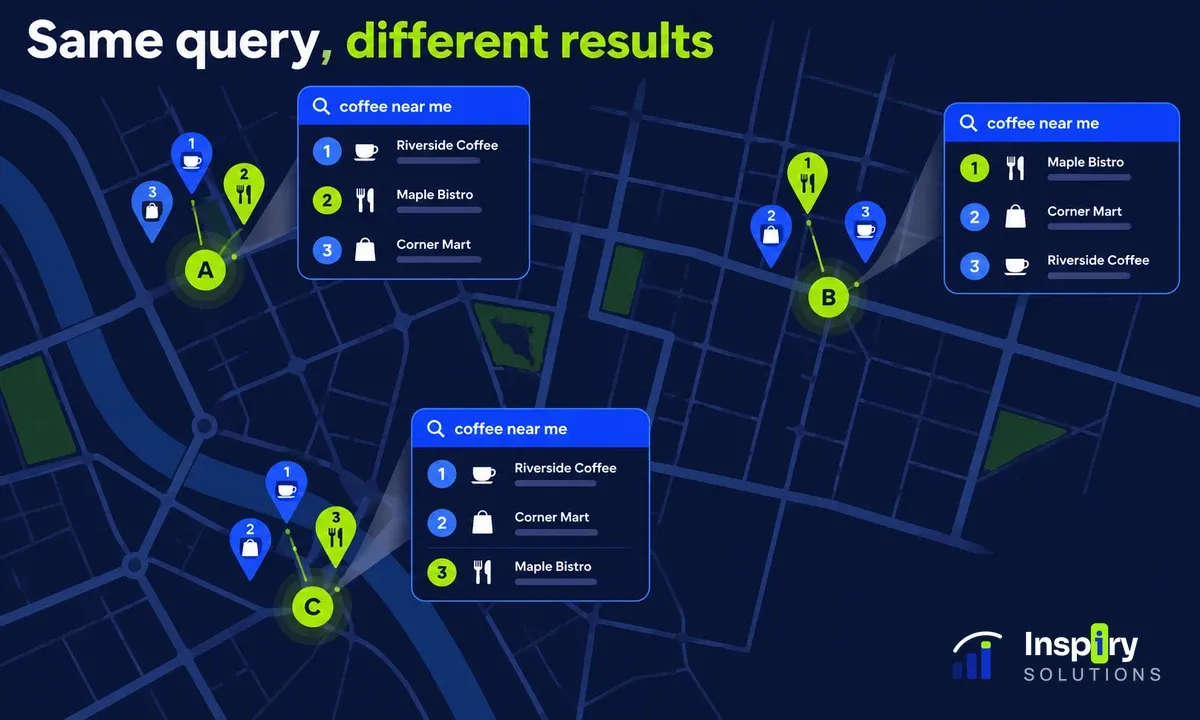
Build a repeatable checking method
Choose valuable phrases such as “emergency plumber”, “boiler repair” and a relevant town-specific search.
Select five fixed points covering the areas you genuinely serve.
Record each query, search point, date, device and visible competitors.
Repeat the same method over time.
A local ranking grid tool can simplify this work, but is not essential. Check how it simulates search locations.
Treat individual position changes as evidence to investigate, not proof that one edit caused a ranking change.
Record profile and website changes so later observations have context.
Connect visibility with enquiries
Use Google Business Profile performance reports alongside website analytics and customer enquiry records.
Useful measures include:
- Calls initiated through the profile, where available.
- Direction requests for customer-facing premises.
- Website clicks and completed enquiry forms.
- Qualified enquiries attributed to local search.
- Visibility across consistent queries and search points.
A call click is not necessarily a completed conversation. Improved visibility also does not guarantee more customers.
Ask new customers how they found the business when practical.
The goal is not simply to improve google maps ranking. It is to generate relevant enquiries and evaluate whether your changes contributed.
Hypothetical example: a plumber outside the top three
Hypothetical example: A plumbing firm appears around position six for “emergency plumber” near its office.
Its primary category is “Contractor”, the profile links to its homepage, and the last review is eight months old.
Before changing anything, the business records the same search from five fixed locations.
It also notes visible competitors and their publicly available profile information.
Apply the fixes in a sensible sequence
First, the firm changes its primary category to an accurate plumbing category, assuming this reflects its business.
Next, it reviews its emergency plumbing page to confirm that the content explains availability, coverage and contact options.
If appropriate, the firm updates the profile link from the homepage to that service page.
It restarts a compliant process requesting genuine customer feedback after completed jobs.
Finally, it checks important local listings for outdated details.
What happens after the changes?
One month later, the firm repeats the same searches from the original five points.
It compares visibility, available profile interactions and actual enquiries against its baseline.
No ranking improvement is assumed.
Correcting the category might strengthen relevance, but distance and competitor prominence can still limit visibility.
Building a stronger review history also requires longer observation.
This method distinguishes changes made from outcomes actually measured.
Common questions
How long does it take to rank in the Google map pack?
There is no fixed timeline and no guarantee of reaching the top three. Category corrections and business profile updates can sometimes be reflected within weeks, while prominence through genuine reviews and local recognition develops over months. Measure the same search phrases from consistent locations over time, and compare enquiry trends rather than relying on one screenshot.
Does putting keywords in my business name help me rank?
Google requires your profile name to reflect the genuine name your business uses in the real world. Adding service keywords or locations that are not part of that name can trigger edits or suspension. If suspended, follow Google’s official appeal and reinstatement procedure, correct guideline violations and provide the requested evidence before seeking recovery.
Why does my business show on Maps at the office but not at home?
Distance from the searcher is one of Google’s three main factors. A search near your office may favour different businesses from the same search at home because results vary by location. Check several fixed points using consistent queries and devices before concluding that your business profile has lost visibility.
Do reviews affect map pack rankings?
Yes. Google identifies review count and positive ratings as prominence considerations, but more reviews do not guarantee a particular position. Feedback must be genuine and must not be purchased or incentivised. Replying professionally also helps customers judge your business, including how you handle complaints. Monitor authenticity and quality alongside the total number.
Can a business without an address rank in the map pack?
Yes. Eligible service-area businesses visiting customers can hide their public address while maintaining a verified business profile. Distance still relates to the underlying verified business location, not every town entered as a service area. Keep location information accurate and follow Google’s eligibility requirements. The service-area versus location-pages guide linked above explains the supporting website approach.
Where to start this week
You do not need expensive software or a fifty-point checklist to begin.
Set aside one hour and complete three checks.
First, confirm your primary category. Make sure it describes the main work your business performs. Remove irrelevant secondary categories.
Second, inspect your linked landing page. Open it on a phone. Check whether it explains your services, coverage and enquiry options.
Third, check your latest genuine review. If feedback is irregular, establish a compliant request process.
Record current settings before making changes.
If these basics are correct but competitors repeatedly appear above you, consider an outside diagnosis.
That review should examine relevance, distance limitations, competitor prominence, website quality and measurement reliability.
Avoid paying anyone who guarantees a top-three position. Ask for evidence, priorities and a clear implementation plan.
If you want to know why a competitor sits above you on Maps, send us your website for a free audit and we will reply within two working days with what we would check first. Our local SEO service then implements the fixes, scoped to your website.