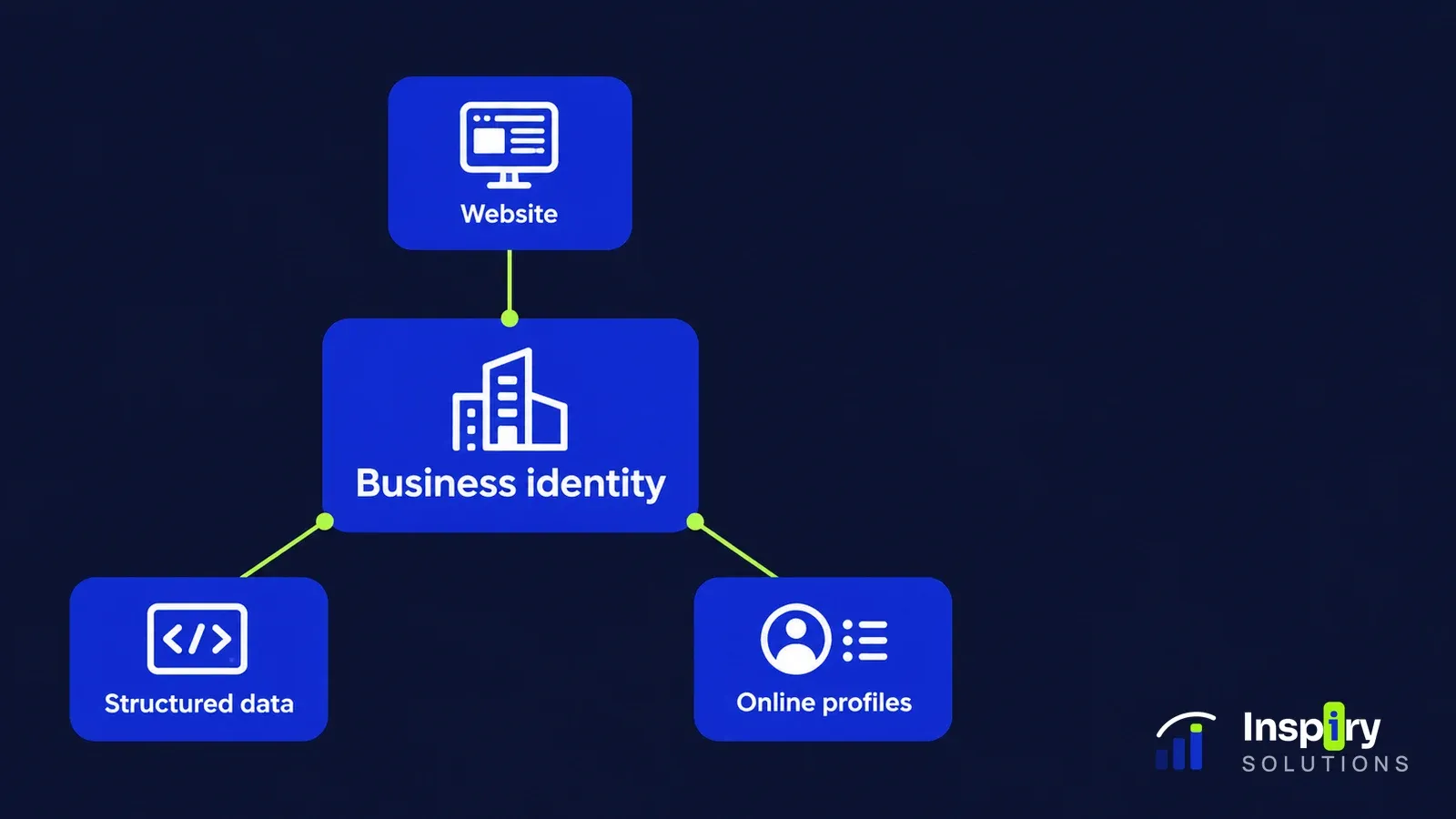
Local citations still matter when they help customers and search systems find accurate business details, but quality and consistency matter more than volume. A correct business name, address and phone number on your website, major maps platforms and relevant industry sites is more useful than hundreds of obscure directory entries. If you have moved premises, changed numbers or received conflicting advice about citation packages, the priority is to correct important records, remove duplicates and check that customers can find the right information.
This guide explains which listings deserve attention, why NAP consistency matters for local SEO and AI-generated answers, and how to clean up outdated information without buying unnecessary submissions.
What a local citation is
A local citation is an online mention of a business and its identifying details.
A citation does not necessarily need to contain every field.
For local SEO, the main distinction is between structured and unstructured mentions.
Structured citations appear in predictable fields on websites such as business directories, map services and professional registers. A listing might display a company name, street address, telephone number and website in separate sections.
Unstructured citations appear naturally within other content. Examples include a local newspaper article, community event announcement, sponsorship page or industry interview identifying your business.
Both can help people discover and recognise an organisation.
How citations differ from backlinks
A backlink is a clickable link from another website to yours.
One directory entry can therefore be both a citation and a backlink.
This matters when reviewing SEO proposals.
Ask which actual websites will contain the information and whether customers are likely to encounter them.
Why citations appear in local SEO quotes
Local citation building is comparatively straightforward to package.
The problem is that submission volume tells you little about quality.
For a business with outdated information, correcting five important listings may be a better investment than creating many new ones.
The useful question is not how many directory entries you own.
Why consistency still matters
NAP consistency means keeping the same accurate business identity across your website and relevant external sources.
Consider a solicitor’s office whose website displays its current premises but whose directory profiles show an address from several years ago.
A potential client might follow the incorrect directions, telephone an inactive number or question whether the firm is still trading.
Search platforms also need to associate different mentions with the correct business.
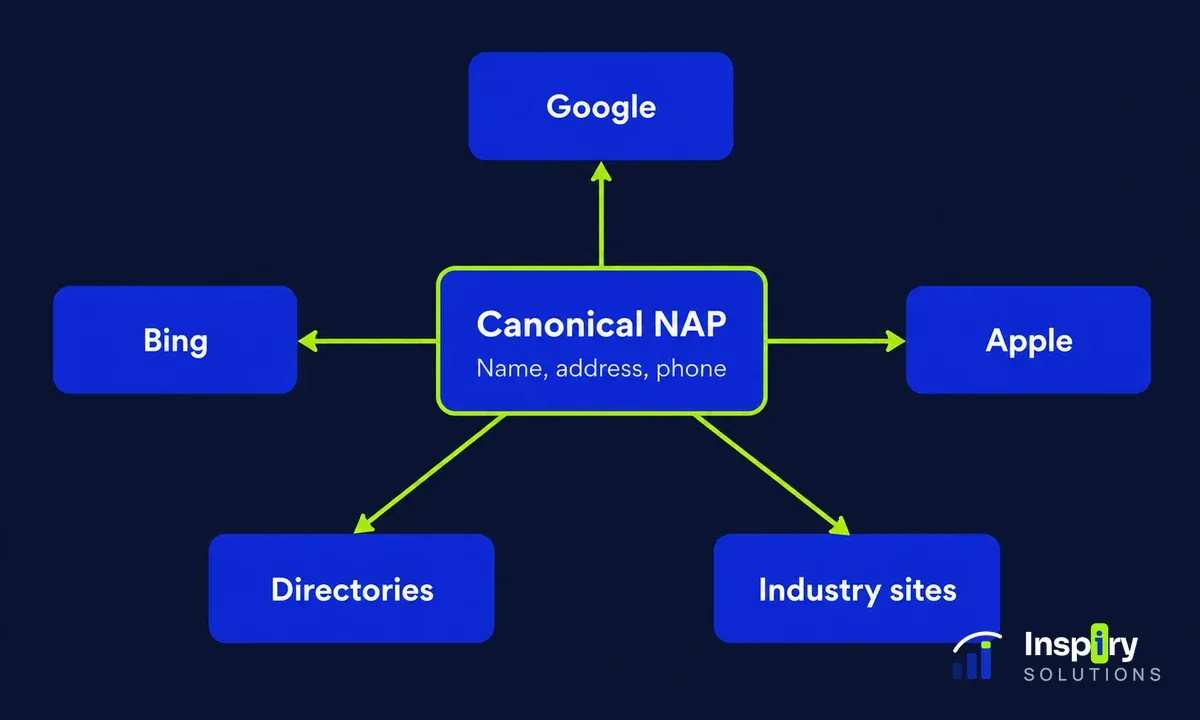
Consistent information supports a clearer identity
Google explains that local results are influenced by relevance, distance and prominence. Its guidance on improving local rankings describes prominence as how well-known a business is, drawing on information from across the web such as how many websites link to it and how many reviews it has.
That does not establish a particular ranking benefit for every directory entry.
Accurate information matters because businesses should be represented correctly and consistently.
If correcting these records is part of a wider project, our local SEO clean-up and setup service focuses on the important sources rather than indiscriminate submissions.
What AI assistants change
AI assistants can present business information drawn from search results, websites and other available sources.
If outdated directory content is available, an assistant may repeat that old information.
This makes checking your business identity across relevant sources worthwhile.
Our guide to keeping your business identity clear for AI explains the wider issue of how organisations are identified in AI search.
You can test whether an assistant presents your correct location and contact information.
The practical objective is accuracy, not an artificial citation count. It is part of making your business unambiguous online.
Local citations that are worth your time
Not every website deserves the same attention.
For most eligible local service firms, maps and primary business profiles deserve attention before general directories.
Major search and maps platforms
Google Business Profile: Check your business name, address or service area, telephone number, website, category and opening hours. Google’s business representation guidelines explain the importance of accurate real-world information.
Our guide to auditing your Business Profile fields provides a more detailed review process.
Bing: Check your business details through Bing Places or the current business management destination it directs you to. Make sure the public listing reflects your actual business details.
Apple Maps: Review the business through Apple Business Connect or Apple’s current business management platform. Pay particular attention to map location, contact information and customer-facing details.
Each platform has its own verification requirements and editing process.
Industry bodies and local organisations
Professional registers, trade associations, accreditation bodies and chambers of commerce can be valuable sources because they provide context about your organisation.
For an accountancy practice, an appropriate professional register may be more useful than a general directory with no meaningful audience.
For a building contractor, a recognised trade association or regional business organisation may provide more relevant exposure.
Only claim genuine memberships and qualifications.
National directories and genuine local mentions
Established national directories can be useful when they are relevant to your country and customers.
Their priority depends on your industry, service area, listing quality and whether people use the platform to find businesses like yours.
Local news coverage, relevant sponsorships and community partnerships can also generate unstructured mentions.
Here is a practical citation priority list.
| Source type | Example | Priority | Why |
|---|---|---|---|
| Your website | Contact page | Essential | Establishes your authoritative business details |
| Google Business Profile | Google Maps listing | Essential | Important customer-facing local search presence |
| Bing Places | Bing business listing | High | Helps maintain accurate details in another search ecosystem |
| Apple Business Connect | Apple Maps listing | High | Important for customers using Apple Maps |
| Industry body | Relevant professional register | High when applicable | Supports industry relevance and business identification |
| National directory | Yell or Yelp | Selective | Useful where the platform is relevant and maintained |
| Bulk low-quality directories | Unrelated submission sites | Low | Little customer value and additional maintenance burden |
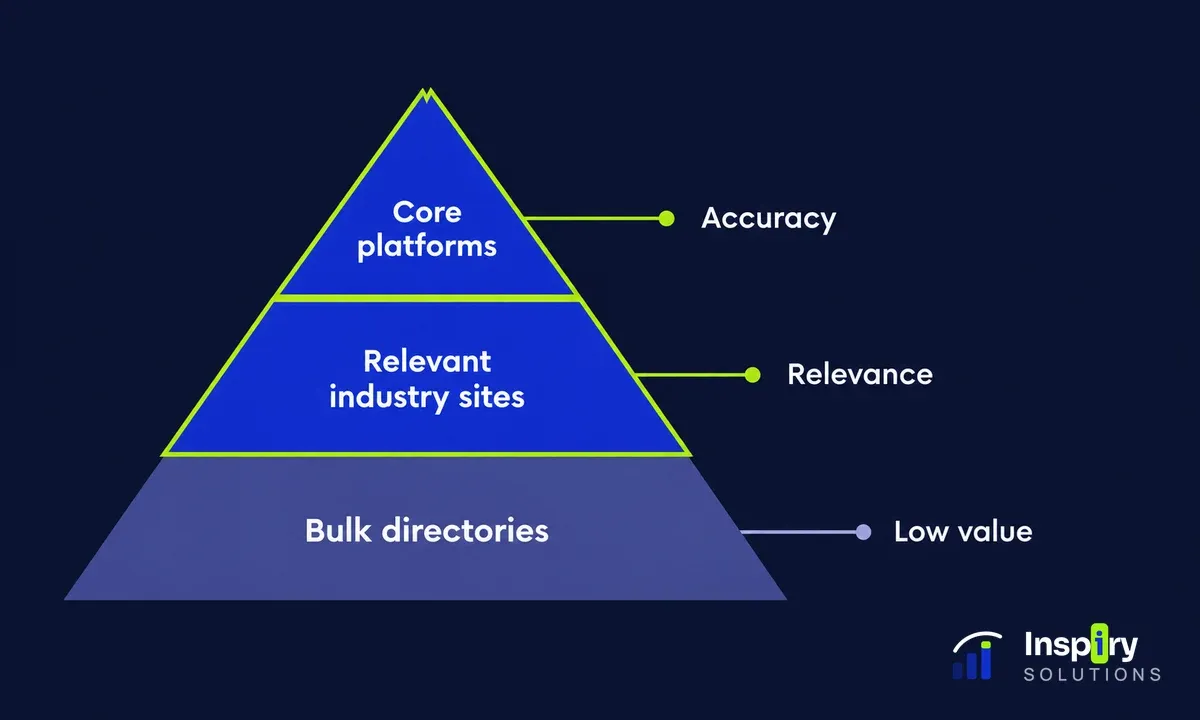
The ranking of these sources is a working priority, not a claim about individual ranking weights.
What is no longer worth paying for
Bulk directory submission is often presented as a shortcut to stronger local SEO.
That should be a warning sign.
A package offering hundreds of entries may contain websites with minimal editorial standards, little relevant traffic and no credible connection to your business.
These listings can create more data to maintain without meaningfully improving customer discovery.
More citations do not automatically mean better rankings
Google’s public explanation of local ranking identifies several factors, including relevance, distance and prominence.
A business cannot compensate for poor service relevance, an unsuitable location or an incomplete profile simply by adding more citations.
Nor should a supplier present a correlation between successful businesses and their directory counts as proof that submissions caused their rankings.
Local citation building should address identified gaps, not chase an arbitrary target.
Duplicate entries can make the problem worse
Automated tools sometimes encounter existing records for the same company.
You might then have different telephone numbers, old addresses or slightly altered company names appearing on the same platform.
That is not progress.
A useful service should identify existing records before submitting anything and explain how duplicates will be handled.
Warning signs in a citation package
Be cautious when a provider cannot show the websites included in the package before payment.
Other warning signs include claiming guaranteed map rankings, promising instant appearance everywhere, ignoring existing errors and providing submission confirmations instead of live listing URLs.
A credible proposal should define the platforms, explain their relevance, describe the correction process and clarify what happens when a listing requires ownership verification.
It should also distinguish between creating a new listing and correcting an existing one.
Ask how success will be checked.
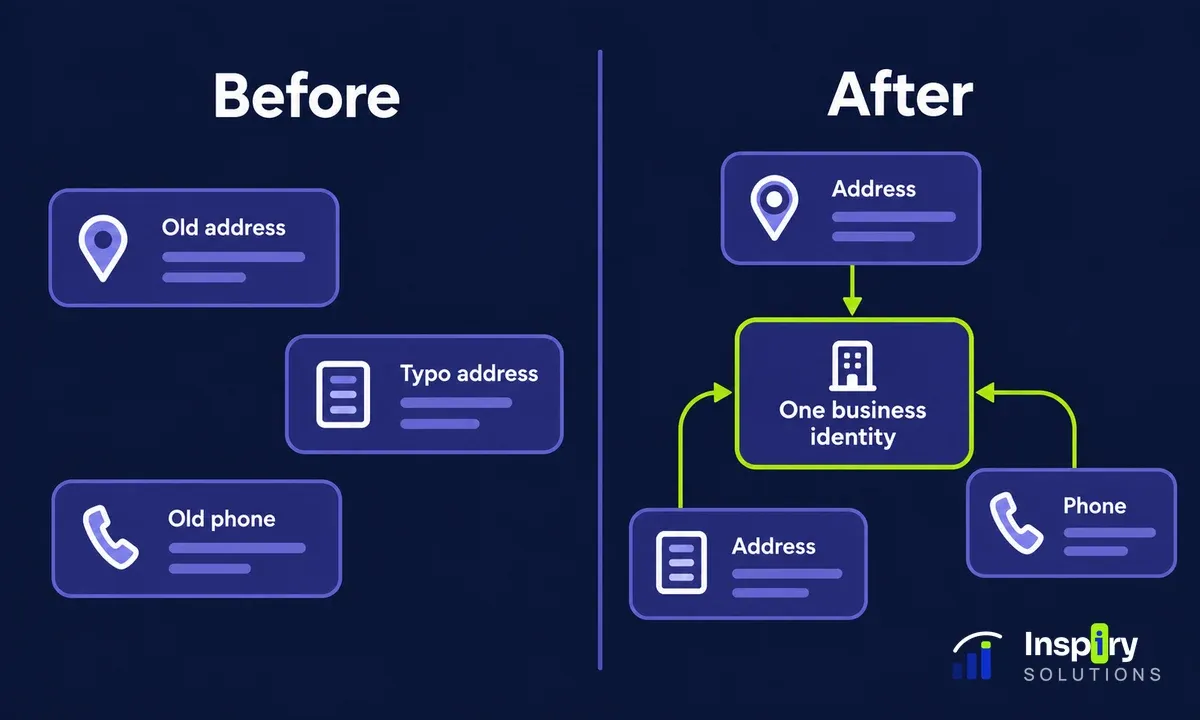
If the seller cannot explain why each category of directory matters to your customers, there is little reason to pay for the quantity.
How to audit and clean up your NAP data in four steps
A useful NAP audit starts with identifying the correct information, not buying a tool or ordering new entries.
Create a simple worksheet containing the source URL, business name, address, telephone number, status, required action and date checked.
Keep screenshots of important errors where possible.
The following four steps create a repeatable process.
Set the canonical NAP
Decide which business name, address and telephone number are officially correct.
Use the real trading name customers recognise.
Confirm the address against your actual premises and business documents.
Choose your primary public telephone number.
Record the preferred display format, including the country code where relevant.
Your objective is accurate, recognisable information, not forcing every platform to display identical punctuation.
For service-area businesses, document whether the address is public or deliberately hidden.
Find mismatches
Search for your current business name alongside its location and telephone number.
Repeat those searches using previous names, old telephone numbers, former addresses and common business name variations.
Search both normal results and maps platforms.
Look for outdated listings, duplicate profiles, incorrect map pins and directories showing mixed old and new information.
Record each issue rather than immediately changing everything.
Classify the findings as correct, incorrect, duplicate, unclaimed or awaiting verification.
Prioritise pages where customers might actually telephone, book, visit or request directions.
Fix the main platforms first
Update the website before distributing changes elsewhere.
Structured data is machine-readable information added to a webpage to describe an organisation or local business.
Next, update Google Business Profile, followed by Bing and Apple.
Then correct appropriate industry profiles and important national directories.
Some websites let the owner edit details immediately.
Record the submission date and whether the updated information is publicly visible.
Do not mark a citation as fixed merely because a change request was submitted.
After updating, open the public listing and verify its name, contact number, location and website destination.
Close or merge duplicates
Identify whether the apparent duplicate is genuinely the same business, a former location or a separate eligible branch.
This distinction matters.
Where possible, claim control of an incorrect duplicate and follow the platform’s process to remove, merge or mark it appropriately.
Google provides profile management and reporting options for duplicate or ineligible listings.
Do not delete a correctly established business profile just to recreate it with tidier information.
For directories without owner controls, contact their support team and retain the request reference.
Finally, revisit each affected public listing to verify the resulting record.
Closing an entry does not guarantee it disappears immediately from every search result or AI-generated response.
Moves, rebrands and new phone numbers
A business move creates more opportunities for conflicting information than a routine directory update.
Website footers, contact pages, map listings, local landing pages and external profiles may all contain details that need attention.
The order matters because you want to establish the correct information before asking third-party services to reflect it.
Start with your website.
Then update Google Business Profile, Bing and Apple.
If a telephone number changes, consider keeping the previous number forwarding to the new one for a suitable transition period, where feasible.
That protects enquiries from customers using old printed materials or bookmarked listings while external information is being corrected.
Rebrands require an identity check
A rebrand may involve a new trading name, domain, visual identity and contact information.
Make sure the new name represents the real business and that updates follow each platform’s requirements.
When the business remains the same legal or operational entity, preserve legitimate profiles where the platform allows appropriate changes.
If the new organisation is genuinely a different business, the correct treatment may differ.
For multiple premises, use a separate verified record of details for each eligible location. Our guide to managing details across several branches explains how location pages can support that structure.
Keep evidence of the move or rebrand and review the public results after the changes have been processed.
Hypothetical example: An accountancy firm moved offices four years ago. Its current website shows the new address, but two general directories and an industry listing still show the former premises.
When someone asks an AI assistant for directions, the assistant provides the old address.
The firm first confirms its official NAP information, including its registered trading name and primary telephone number.
It checks the website and major maps profiles, then records the three outdated listings and their ownership requirements.
The industry entry is treated as a priority because potential clients may use it to check the firm’s professional details.
The firm requests corrections, keeps evidence of each submission and checks the public pages again once changes are processed.
It also repeats the original AI question, including variations of the firm name and location, to observe whether the old address is still being returned.
This is a verification process, not a guaranteed outcome. The assistant may continue presenting stale information, and the business cannot control every third-party data source.
The useful result of the exercise is a documented set of corrected listings, outstanding issues and subsequent checks.
Common questions
Do local citations still help rankings?
Google describes prominence as how well-known a business is, based on information from across the web such as links from other websites and reviews. Relevant local citations can contribute to a clear online business presence, but their individual ranking impact is not guaranteed. Accuracy on important platforms matters more than raw volume. Do not expect bulk directory submissions to produce meaningful ranking improvements by themselves.
What does NAP stand for?
NAP stands for name, address and phone number. These are the core details used to identify and contact a local business. Some marketers also use NAPW, adding the website URL. NAP consistency means keeping these details correct across relevant sources, while respecting different platform formatting rules and address visibility settings.
Should a service-area business with a home address build citations?
Yes, but only on platforms that allow the business to hide its residential address where required. The approach should remain consistent with its Google Business Profile address visibility setting. Never publish a private home address simply to achieve matching directory fields. Select platforms that support legitimate service-area businesses without displaying their residential premises.
How do I remove a duplicate listing?
First, confirm that the listing is genuinely a duplicate rather than a separate business or eligible location. Claim it if possible and use the platform’s process to close or merge the record. On Google, duplicates can be reported or handled through relevant Business Profile tools. Keep a record and check the public result afterwards.
Is a citation building service worth it?
It can be worthwhile when the service targets relevant, high-quality sources and corrects existing errors. Ask for the proposed list of websites before paying, along with an explanation of how the provider handles duplicates and verification. Avoid packages that sell a large submission count without showing which listings will be useful or how completed corrections are confirmed.
Start with the five listings that matter most
If you have limited time, begin with five sources: your website, Google Business Profile, Bing, Apple Maps and one relevant professional or industry organisation.
Check the details customers need to contact or visit your business. Confirm that the correct website is linked, telephone calls reach the right team and directions lead to the intended location.
Where your business is not eligible for a particular profile, do not create one simply to complete the list. Prioritise the legitimate platforms your customers use.
Review the main records quarterly and whenever the business changes its name, address, telephone number or location arrangements.
Keep a dated record of corrections so a future audit does not repeat the same investigation.
A well-maintained set of credible listings is easier to verify than an uncontrolled collection of low-value entries.
The objective is simple: customers should find the correct business, at the correct location, with a reliable way to contact it.
Unsure which listings are out of date? Send us your website for a free audit and we will reply within two working days. Our local SEO service can then fix the data across the platforms that matter, scoped to your website.