Perplexity SEO means making your website accessible, accurate and useful enough to be considered when Perplexity searches for answers and cites web pages. Perplexity can search the web, produce a written response and display numbered links to supporting sources. Getting cited is not simply a matter of adding keywords. Your pages need to be reachable, contain relevant information and answer real customer questions clearly. You can improve those conditions, but you cannot control which pages Perplexity selects or guarantee that a particular answer will mention your business.
If you have noticed Perplexity in your analytics reports, or regularly use it to research services, this guide explains what its crawler documentation confirms and what remains uncertain.
How Perplexity answers a question
Perplexity is an AI-powered answer service that can retrieve information from the web and present a response with numbered source links.
For a business, this introduces another way that potential customers might discover its content.
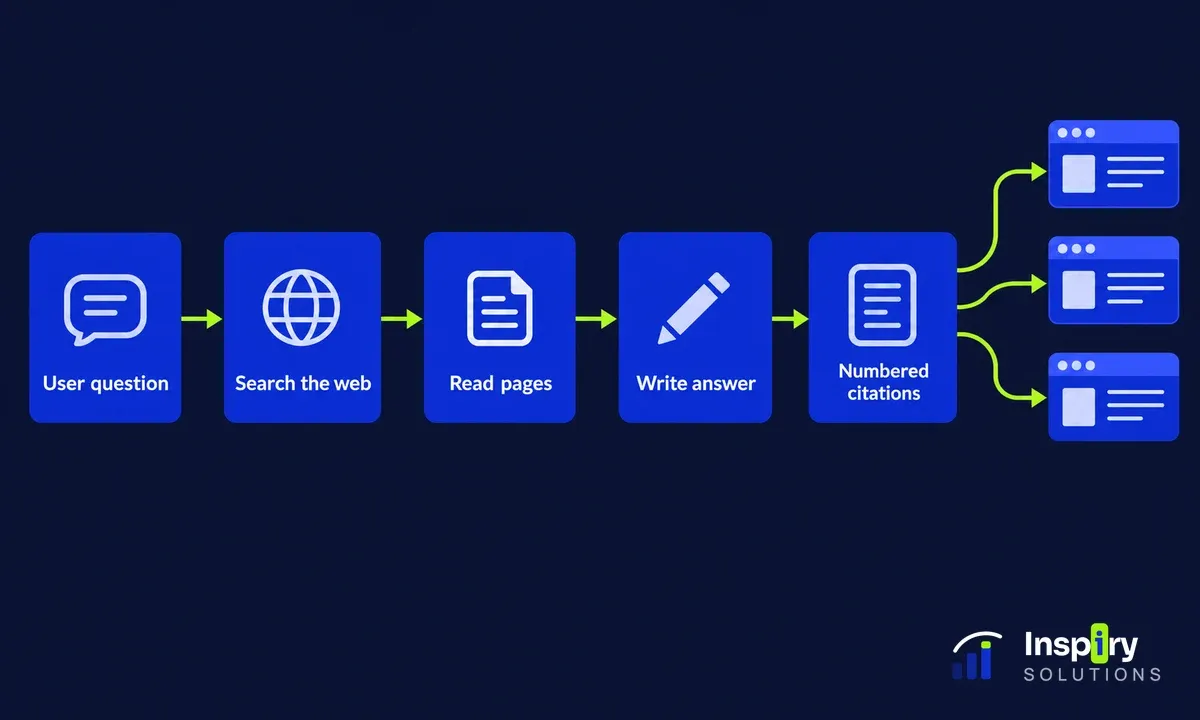
A typical experience looks like this:
- A customer asks a question, such as what a bookkeeping service should include.
- Perplexity searches for relevant information.
- It retrieves information from available web pages.
- It creates an answer based on the information it uses.
- It displays numbered citations that users can open to inspect the referenced pages.
The important distinction is between what you can observe and what you cannot verify.
You can inspect an answer, open its cited links and record which pages appeared.
You cannot determine Perplexity’s complete internal selection process simply by looking at a response.
When researching how Perplexity chooses sources, treat the visible answer as an observation, not a complete explanation of its internal ranking systems.
This distinction protects businesses from spending time on optimisation tactics that have no reliable supporting evidence.
Perplexity’s crawlers and what they do
Perplexity publishes documentation explaining the purpose of its web agents and how site owners can manage access.
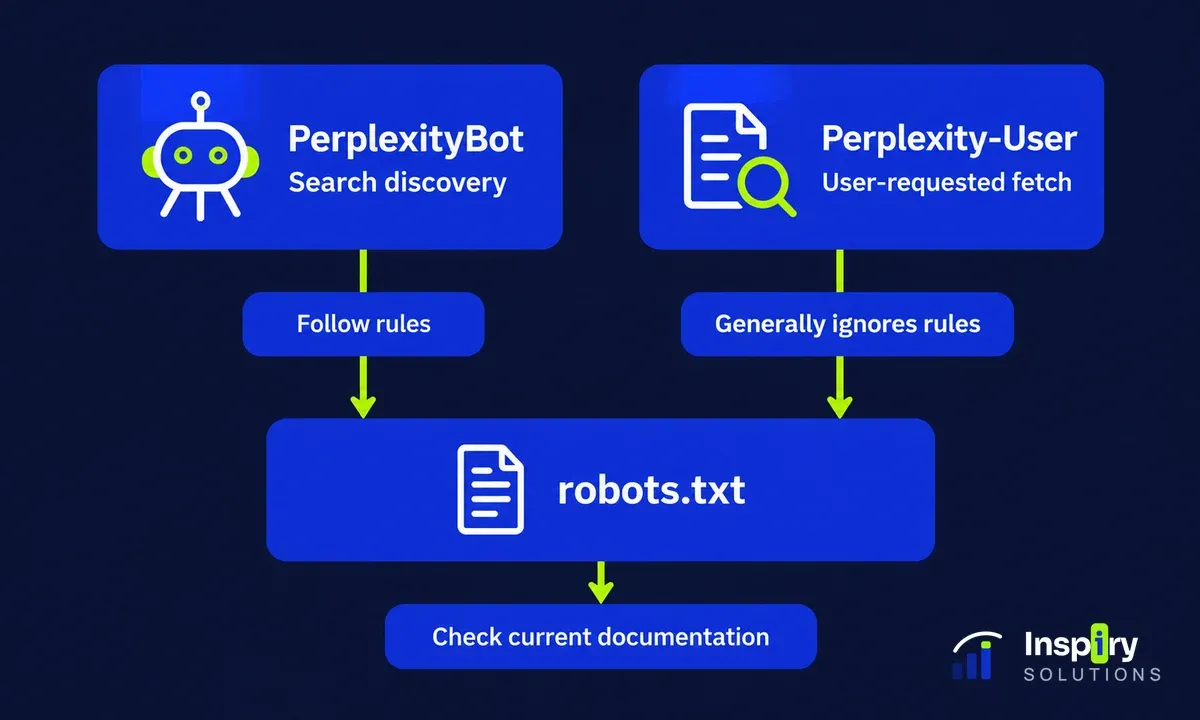
Its official crawler documentation identifies two agents with different responsibilities: PerplexityBot and Perplexity-User.
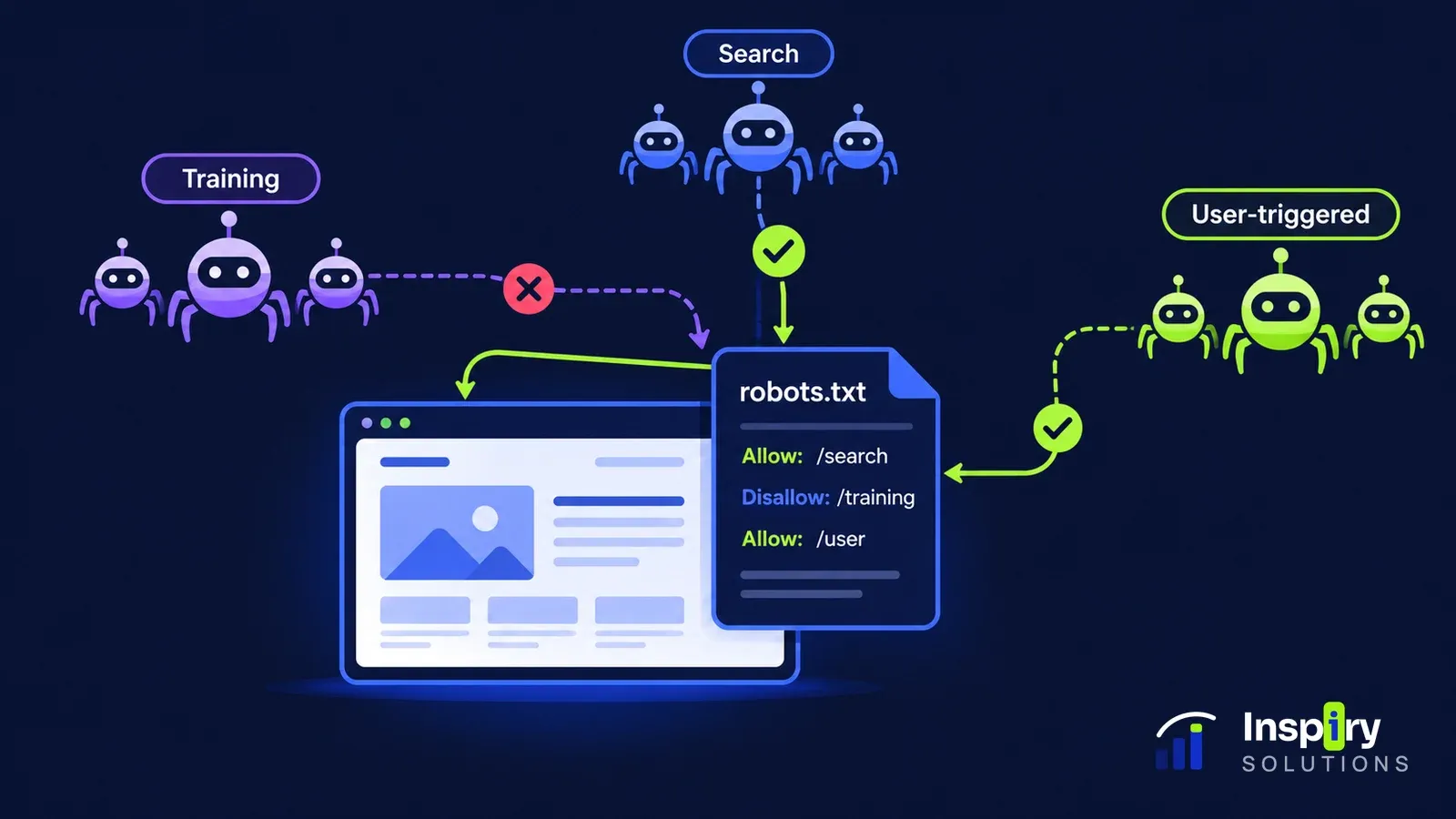
PerplexityBot is designed to surface and link websites in search results on Perplexity. Perplexity says it is not used to crawl content for AI foundation models.
The documentation recommends allowing PerplexityBot through robots.txt and permitting requests from its published IP ranges if you want your website to appear in its search results.
Perplexity-User supports user actions within Perplexity. When someone asks a question, it might visit a web page to help provide an accurate answer and include a link to that page in the response.
Perplexity states that Perplexity-User is not used for web crawling or to collect content for training AI foundation models. Because a user requested the fetch, the documentation says this fetcher generally ignores robots.txt rules.
Perplexity also notes that robots.txt changes may take up to 24 hours to be reflected in its systems.
This difference matters when considering perplexitybot robots.txt settings.
A robots.txt file is a set of instructions that tells cooperating crawlers which website paths they may access.
If you want to allow PerplexityBot, a simple explicit rule is:
User-agent: PerplexityBot
Allow: /
If you want to disallow its crawling across the website, the corresponding rule is:
User-agent: PerplexityBot
Disallow: /
These are alternative configurations, not instructions to publish together.
Google’s introduction to robots.txt explains the general purpose and limitations of crawler instructions.
Do not assume that a PerplexityBot restriction will prevent user-triggered requests from reaching the same public page.
If you need content to remain private, use appropriate authentication and access controls rather than relying on crawler instructions.
A content delivery network (CDN), such as a service that caches and protects website traffic, or a web application firewall (WAF), may block legitimate crawler requests even when robots.txt permits them.
Perplexity recommends checking both agent identification and its officially published IP ranges when configuring firewall access.
For a broader explanation of these choices, see our guide to AI crawler allow and block choices.
If you want help checking crawler access alongside your wider website setup, our AI visibility service covers technical access, content visibility and practical recommendations.
The key point is straightforward: allowing a crawler makes access possible.
What you can observe about cited sources
The most useful starting point for Perplexity SEO is a repeatable observation process.
Rather than trying to reverse-engineer an undocumented ranking formula, investigate the questions your customers ask and record the pages Perplexity references.
This gives you a practical evidence base for deciding what to improve.
Choose the questions
Start with 10-15 questions that real prospects might ask before contacting your business.
Include questions about service definitions, costs, comparisons, suitability, common problems and choosing a provider.
A bookkeeping firm might investigate questions about bookkeeping responsibilities, preparing business records, choosing between services and the information needed for an initial consultation.
Avoid writing only questions that contain your company name.
Branded questions can help you investigate whether your business information is represented accurately, but non-branded questions are useful for understanding which websites appear during general customer research.
Keep the wording natural.
Record the exact wording of every question so future comparisons remain meaningful.
Record citations
Run your questions in Perplexity and examine the visible citations.
For each response, record the date, the cited domains and the type of page involved.
Classify each result as a business website, service page, educational article, directory, review page, comparison article or other relevant format.
Record whether your own website is included.
Use this citation log template as a starting point.
Example layout only, not data.
| Question | Date | Cited sources (domain and page type) | Your site cited? (yes or no) | Notes on what the cited page did well |
|---|---|---|---|---|
| What does a bookkeeper do? | Example date | example.org, guide | No | Clear service definition |
| What records should a business keep? | Example date | example.net, checklist | No | Specific, organised answer |
| How do I choose a bookkeeping firm? | Example date | example.com, comparison article | Yes | Explains evaluation criteria |
| What affects bookkeeping costs? | Example date | example.edu, educational article | No | Clear explanation of cost factors |
These example domains are placeholders.
To make the log more useful, add the full cited URL in your working spreadsheet, even if your summary displays only the domain.
Record whether you were signed in, your approximate location or market, the language used and any other conditions that might influence the response.
Perplexity answers can change.
Our guide to recording AI answers systematically explains how to organise a wider AI visibility review.
Spot patterns
Once you have recorded the answers, inspect the pages that appeared repeatedly.
Look for characteristics that are visible and verifiable.
Does the page answer the question near the beginning?
Also look at where the information comes from.
An independent directory may appear for a provider comparison, while a specialist business might appear for a technical explanation.
These observations can help you decide which content gaps deserve attention.
However, do not mistake correlation for a documented Perplexity ranking factor.
For example, finding that several cited pages use short paragraphs does not prove that Perplexity rewards a particular paragraph length.
The correct conclusion is that the pages are structured in a way worth examining, not that you have discovered an algorithmic rule.
Hypothetical example: A bookkeeping firm runs 12 customer questions in Perplexity. Its own website is cited for one question, while directories and a comparison article receive most of the citations.
The firm reviews those pages and discovers that its directory listings contain incomplete information. It also finds that two service sections explain its work vaguely rather than answering common questions.
It corrects the directory listings, rewrites those sections with direct answers and repeats the citation log a month later.
The purpose is to observe whether visibility changes. The example does not assume or promise that the work produces additional citations.
Perplexity SEO checklist: six checks for your pages
There is no documented special markup in the sources used here that guarantees inclusion in Perplexity answers.
Most practical improvements are familiar technical SEO and content-quality tasks.
Use these six checks before investing in more speculative Perplexity SEO tactics.
1. Crawl access for Perplexity crawlers
Start by confirming whether PerplexityBot can access the public pages you want discovered.
Open your robots.txt file and inspect relevant user-agent rules.
Next, review firewall, CDN and server security logs for blocked requests.
If a request is blocked, identify which security rule caused it before changing permissions.
Where possible, verify legitimate crawler requests against Perplexity’s published agent information and current IP ranges.
Keep a record of the original configuration and the changes made.
Access is a prerequisite for normal crawling, but allowing PerplexityBot cannot force the system to select your content.
2. Indexable HTML text
Make sure the important information on each page is available in readable HTML.
HTML is the code format used to structure normal web pages.
Check whether the main answer is present when the server delivers the page, or whether it depends entirely on browser scripts loading successfully.
JavaScript-heavy interfaces are not automatically a problem, but unnecessary rendering dependencies can introduce failure points for automated visitors.
Check page visibility settings, including accidental noindex instructions.
Use sensible page titles, headings and internal links.
The goal is a page that can be accessed and understood without relying on decorative design.
3. Answer-first sections
Review whether your pages answer customer questions directly.
If a heading asks what a service includes, the opening sentence beneath it should explain what is included.
For example, a page about bookkeeping can explain the work performed, who needs it and what information a customer should prepare.
Follow the direct answer with details, limitations, examples and next steps.
This structure helps human visitors assess whether the information is useful.
Google’s people-first content guidance supports creating original, useful information that meets readers’ needs.
That guidance is not evidence of a specific Perplexity citation factor.
4. Clear entity facts
An entity is a recognisable person, organisation, location, product or service.
Check that your business information is consistent across your website and genuine public profiles.
Important facts might include your trading name, services, operating locations, contact details, professional qualifications and relevant business policies.
Use only qualifications, achievements and claims that can be substantiated.
If your company serves customers remotely, explain that clearly rather than presenting an unsupported local office address.
For service pages, distinguish what you provide from what you do not provide.
Review your About, Contact and service pages together to identify contradictions.
Accurate information cannot ensure a Perplexity citation, but conflicting descriptions can create unnecessary confusion for customers and anyone researching your organisation.
5. Dated information
Review content where accuracy depends on time.
Examples include pricing, product availability, legal requirements, software features, opening hours and service conditions.
If a page provides information that may change, include a meaningful update date where appropriate and explain the period to which the information applies.
A date should reflect actual review or revision work.
Do not automatically refresh publishing dates without checking the underlying content.
Also inspect older articles that refer to discontinued products, expired offers or outdated procedures.
A reliable page should help readers understand whether the answer still applies.
During your citation review, you can observe whether the cited pages display dates.
Treat dated information as an accuracy requirement, not a shortcut to additional citations.
6. Fast, reliable server responses
Check whether important pages load reliably when requested.
A page that intermittently returns a server error cannot consistently deliver useful information to visitors or automated clients.
Inspect server logs for failed requests, repeated timeouts, authentication challenges and unexpected redirects.
Test important pages from an ordinary browser and, where appropriate, with technical tools that inspect HTTP responses.
An HTTP response is the server’s reply to a request.
Review caching, security rules and redirect chains, especially after hosting or plugin changes.
Improving reliability makes content more consistently accessible.
After completing the checklist, rerun your original customer questions.
When the citations go to other sites
Sometimes Perplexity cites a directory, review platform, forum or comparison article instead of the business’s own website.
That does not automatically indicate a technical problem.
The first task is to understand the question’s intent.
If the customer wants a neutral comparison, rewriting a service page to repeatedly claim that your business is the best option is unlikely to provide the same information.
Instead, make sure your website clearly explains your services, differentiators, limitations and verifiable facts.
Review legitimate third-party profiles for inaccurate descriptions, old contact information and broken website links.
Correct information through authorised profile-management processes.
Do not manufacture reviews, create misleading comparison pages or post disguised promotions in community discussions.
You also cannot control whether independent publishers mention your company or whether Perplexity uses their content.
A useful strategy combines accurate owned content with legitimate third-party information.
When another domain receives the citation, record that outcome rather than treating it as a failed visit to your site.
Measuring Perplexity traffic
Perplexity SEO measurement should separate two outcomes: appearing as a cited source and receiving website visits.
A citation is visible in the answer interface.
The two measures are related, but they are not interchangeable.
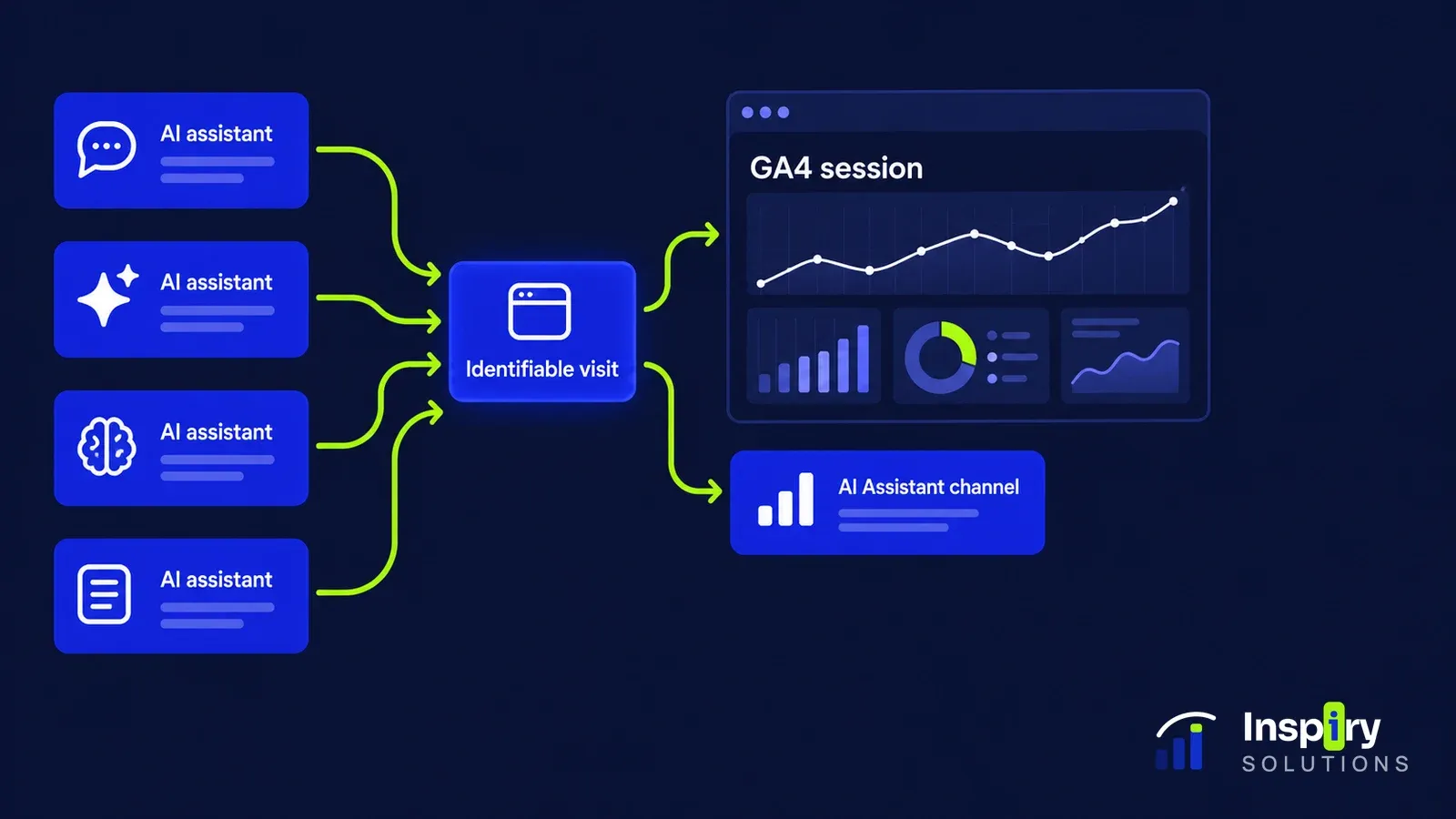
In Google Analytics 4 (GA4), the standard Google website analytics platform, look for traffic with perplexity.ai as a referral source.
Inspect the landing pages associated with those visits.
Then review whether those visits are associated with meaningful actions, such as an enquiry form submission, a phone-link click or another properly configured conversion event.
Check your existing tracking before drawing conclusions.
Some visitors may arrive without referral information, and analytics tools can classify such sessions differently.
Therefore, GA4 referral totals should not be described as the complete number of people who encountered your business in Perplexity.
Our guide to AI referral reporting in GA4 covers a broader method for reviewing traffic from AI assistants.
Alongside referral reports, repeat your citation log monthly.
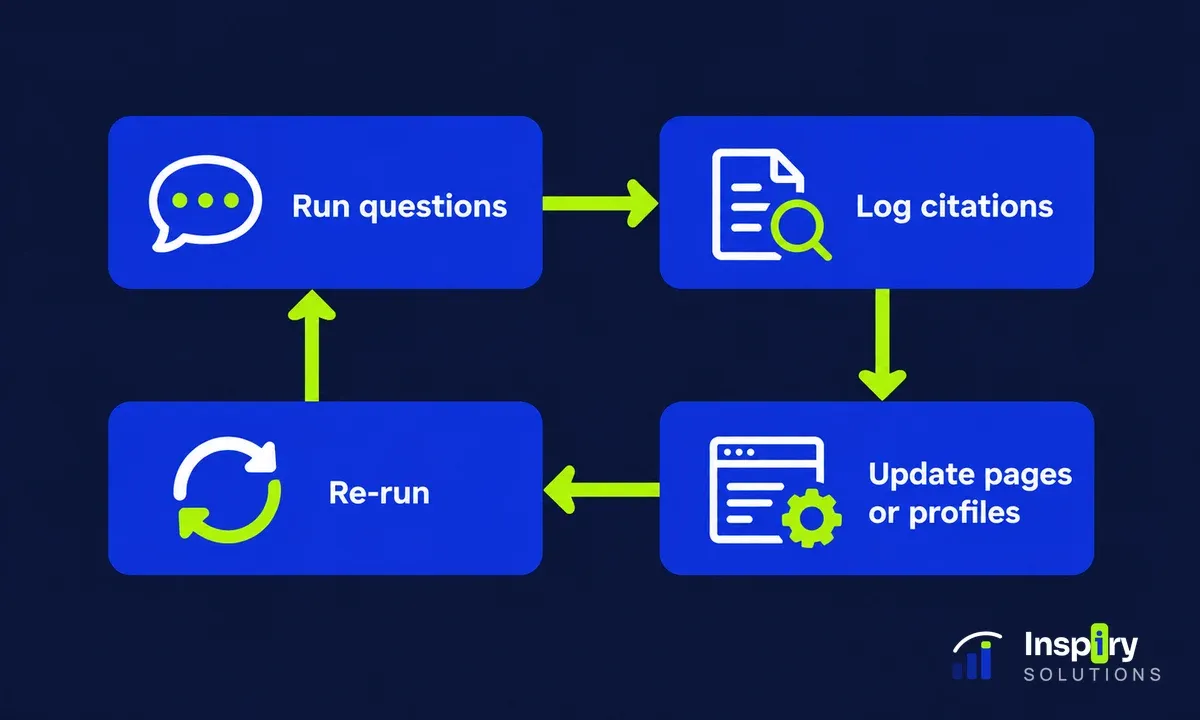
Use the same core questions and record any changes in your testing conditions.
Compare which domains appear, which of your pages are cited and whether useful referral traffic reaches your site.
When you update a page or business profile, record the change date.
Avoid claiming that an increase or decrease was caused by one edit unless you have adequate evidence to support that conclusion.
Your monthly report should explain what was observed, what was changed and what you plan to investigate next.
That is more useful than presenting a speculative citation score as a guaranteed measure of success.
Common questions
Does Perplexity respect robots.txt?
Perplexity’s documentation describes how each of its agents treats robots.txt. Perplexity recommends allowing PerplexityBot in robots.txt if you want to appear in its search results, and says Perplexity-User generally ignores robots.txt rules because a user requested the fetch. Check the current documentation, as this may change. For private content, use access controls rather than robots.txt alone.
Can I pay to be cited in Perplexity answers?
Organic citations are not documented as purchasable in the official sources used for this guide. Any advertising options should be considered separately from organic citations. Paying for promotion should not be interpreted as a guarantee that your website will appear as a supporting source in normal Perplexity answers.
Is Perplexity SEO different from Google SEO?
Most foundations are the same: crawler access, clear answers, accurate business facts and useful content. The main practical difference is how you observe and measure citations within AI-generated answers. Google rankings and Perplexity citations are different outcomes, so review them separately rather than assuming improvement in one guarantees improvement in the other.
How do I see Perplexity traffic in analytics?
Look for perplexity.ai as a referral source in GA4 and inspect the associated landing pages and enquiry events. Some visits may arrive without a referrer, which means referral reporting may undercount actual visits originating from Perplexity. Combine analytics with a recurring citation log to understand visibility and website engagement separately.
Where Perplexity fits in your AI visibility work
Perplexity is one part of a wider AI search environment.
Your customers may also use ChatGPT, Google Search or other tools when evaluating products, services and providers.
The practical priority is to investigate where your customers actually research their decisions, rather than optimising equally for every platform without evidence of demand.
If your audience also relies on ChatGPT, our guide to getting into ChatGPT answers too explains another part of the visibility problem.
Begin with the fundamentals: make your pages accessible, publish genuinely useful answers and maintain accurate business information.
Then develop a small set of real customer questions and review which sources appear across the relevant services.
Use those observations to prioritise content improvements and technical fixes.
The aim is to make your business easier to discover, verify and understand wherever people research it.
Want to know which sources Perplexity cites for your customers’ questions and why? Send your URL for a free audit, or see what our AI visibility service covers.