White label WordPress development works when an agency owns the client relationship and a delivery partner builds to an agreed brief under that agency’s brand. Define scope, communication, access, quality checks, ownership and support before work starts. The arrangement should make delivery accountable, with a clear person responsible for every decision and release.

Extra capacity alone does not create a reliable partnership. Your agency remains responsible for the promises it makes to clients, even when someone else writes the code. A useful operating model lets you sell confidently, review work efficiently and support the finished website without depending on undocumented knowledge.
1. Define your white label WordPress development model
Decide whether the partner supplies production capacity, technical leadership or a complete delivery team. Those roles need different briefs and prices. A developer implementing approved designs should not silently become responsible for strategy, copywriting and SEO.
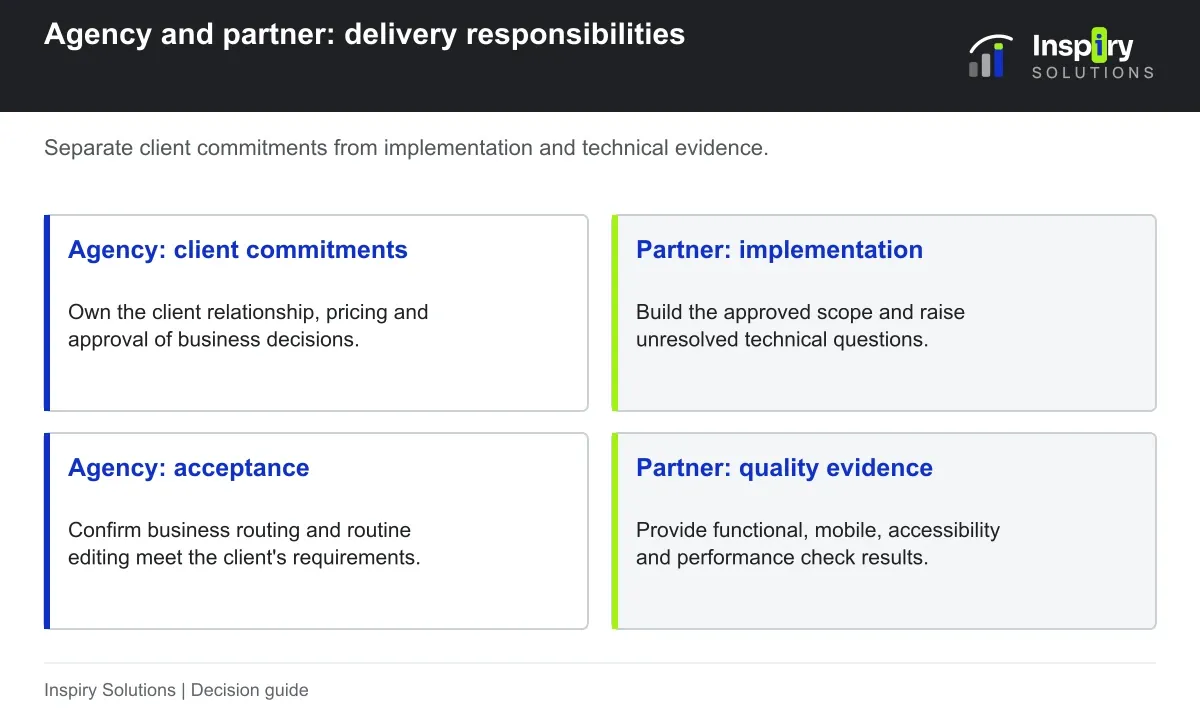
Assign white label WordPress responsibilities across discovery, design, development, content entry, testing, launch and support. Name the person who resolves technical uncertainty and the person who approves business decisions. If the agency lacks technical review capability, include that function in the arrangement.
Be accurate about the delivery model in client commitments. Branding and confidentiality arrangements should be agreed, but the agency should follow any client requirements about subcontracting. For broader resourcing decisions, compare the trade-offs in agency versus freelancer web development.
2. Make the white label WordPress brief testable
A page count does not define the white label WordPress development scope. A five-page site with multilingual content, bookings and custom integrations can require more work than a larger brochure site. List templates, page states, reusable components, content sources and functional journeys.
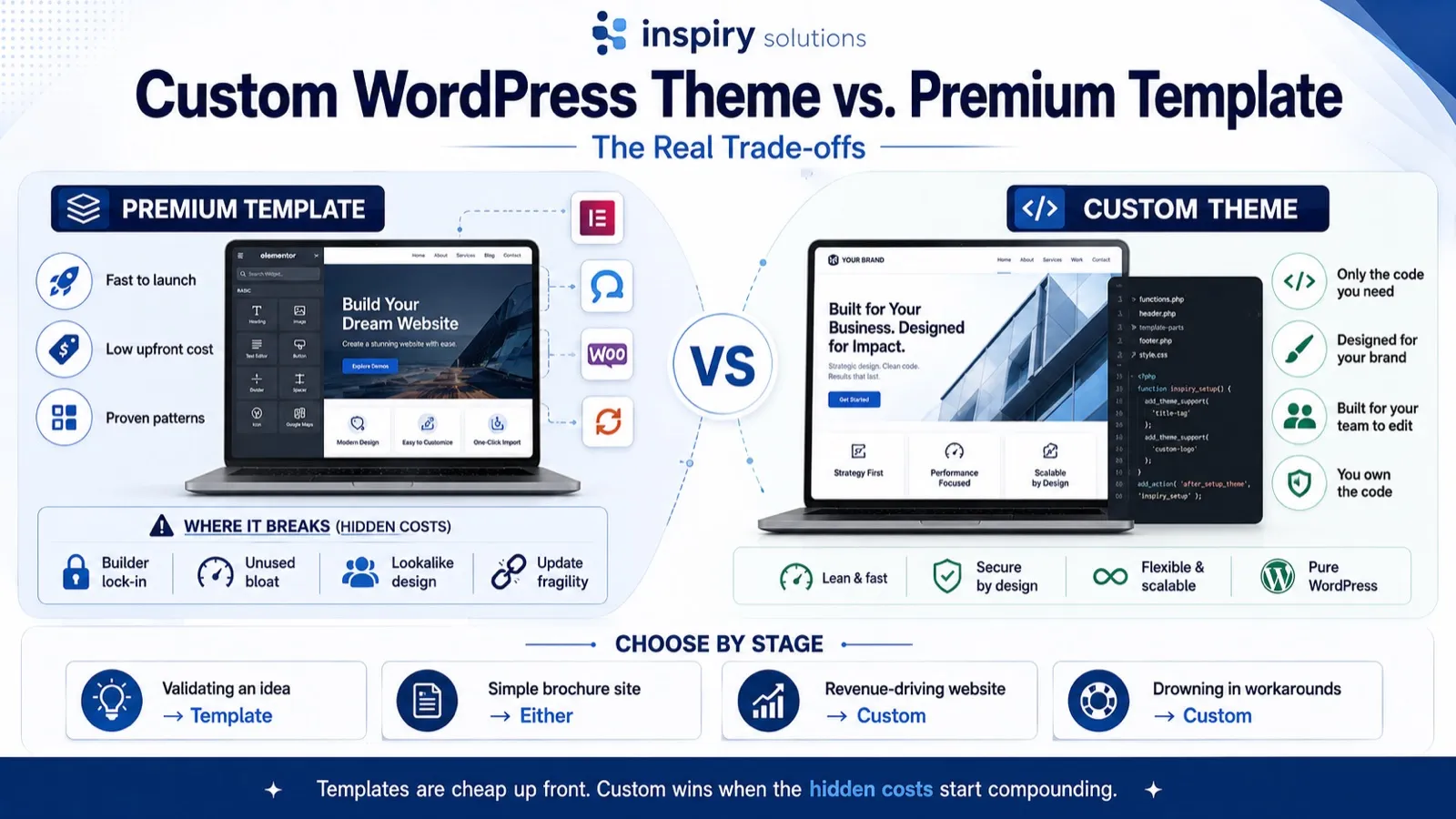
Include mobile designs, accessibility expectations, supported browsers, editing requirements and error states. Define whether the team will use a block theme, a page builder or a custom theme. The custom theme versus template guide can help your team choose an appropriate level of flexibility. For functionality outside the theme brief, use the custom versus existing WordPress plugin guide to agree what should be bought or built.
Hypothetical example: a vague form requirement
An agency requests a contact form. The partner delivers name, email and message fields, while the client expected conditional questions, file uploads, CRM routing and a consent record. The problem began with the brief. A stronger requirement lists the fields, permitted files, destination, validation messages and evidence that a submission arrived.
Record assumptions and exclusions before estimating. Client-supplied content, design approval and integration credentials are dependencies with owners and dates. If a dependency changes, the schedule should be reassessed explicitly.
3. Align white label WordPress pricing and change control
Choose a commercial model that matches the work. Fixed pricing suits a stable, reviewed scope. A time allowance can suit discovery or uncertain integrations. Reserved capacity can support recurring work, provided availability and priorities are defined.
Separate your client price from the partner’s production cost. Your white label WordPress pricing must cover sales, account management, design review, coordination and support obligations. A low build price can become expensive if the agency must repeatedly clarify incomplete requirements.
Agree how revisions work. Distinguish a defect against the approved brief from a changed requirement. Set a process for pricing changes, approving them and adjusting milestones. Clients need clarity about consequences before the team begins extra work.
Maintain a shared capacity view with realistic start dates and named dependencies. Avoid promising every enquiry the same launch date. The website cost guide is useful when explaining why scope and delivery responsibilities affect a quote.
4. Set white label WordPress communication boundaries
A white label WordPress project needs one operational contact on each side and a route for urgent issues. Keep decisions, questions and approvals in a shared project system. Private messages can resolve a quick point, but the decision should return to the project record.
Agree whether the partner joins client calls, writes technical notes for the agency or communicates only through the account manager. If it joins calls, define introductions and who can discuss scope, prices and dates. Nobody should make commitments that another team must fulfil without review.
Confidentiality and client-contact arrangements belong in the agreement. Also define how the partner may describe its work publicly, whether portfolio use needs approval and how subcontractors are handled. Practical operating rules matter alongside formal wording.
Make status updates useful: work completed, work ready for review, blocked decisions and expected next milestones. A percentage-complete report tells the agency little if a key integration remains unresolved.
5. Control access, credentials and test data
Use named accounts for white label WordPress delivery so changes can be attributed. Grant the access needed for the task, review it at milestones and remove it when no longer required. Avoid passing the client’s shared administrator password through email or project comments.
WordPress roles and capabilities provide controls over what users can do. Some development work needs broader access than content editing; make that requirement explicit and use temporary elevation when practical.
Keep credentials in a secure vault and record who owns hosting, domains and external services. Production customer data should not automatically be copied into every developer’s environment. Use sanitised data where it meets the test requirement, and restrict access when genuine records are necessary.
Prevent test environments from sending live customer emails, running production payments or duplicating scheduled actions. These checks are especially important when a white label WordPress partner works across several client projects.
6. Agree quality checks before development
White label WordPress quality should have evidence attached. Define functional tests, design review, content checks, accessibility checks and performance checks in the brief. Allocate responsibility between the partner’s internal review and the agency’s acceptance review.
| Review area | Partner evidence | Agency decision |
|---|---|---|
| Forms and integrations | Submission and delivery test results | Correct business routing |
| Editing | Demonstrated page and component changes | Client can manage routine content |
| Mobile and accessibility | Keyboard, layout and error-state checks | Approved user journeys |
| SEO and performance | Crawl comparison and page measurements | Launch acceptance |
Test representative templates and journeys, including long headings, missing images and validation errors. Automated tools can find some faults, but manual keyboard and mobile checks remain useful. An approved desktop screenshot is not acceptance of the complete website.
Define a measurable performance budget appropriate to the project. Involve website performance specialists where necessary. For a replacement site, assign redirects, indexing and canonical checks to someone capable of evaluating technical SEO.
7. Clarify white label WordPress ownership and licences
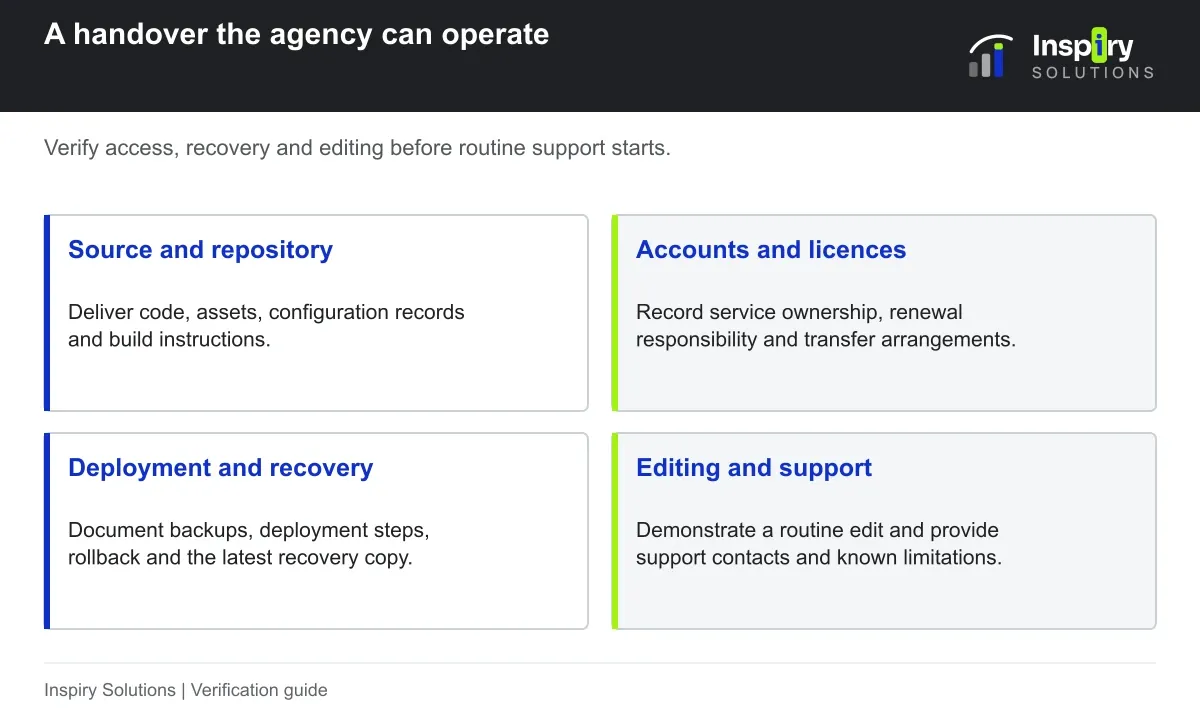
Agree the white label WordPress handover: source code, repository access, build instructions, assets and configuration records. Document ownership arrangements for commissioned work and any limits arising from third-party components. The client and agency should understand what can be transferred to another maintainer.
WordPress licensing guidance explains that plugins commonly use the GPL. Separate those software licences from commercial responsibilities for subscriptions, updates and support. Avoid assuming that paying a build fee transfers every vendor account.
List each paid plugin, its renewal owner and the consequence of cancellation. An agency licence may be convenient, but the client needs to know what happens if it changes providers. Provide a transfer or replacement plan where required.
Check staging entitlements against vendor rules. Elementor’s activation guidance, for example, exempts specified development and staging domain patterns rather than every possible test installation. Confirm the intended setup instead of assuming all staging sites are free activations.
8. Plan releases and handover
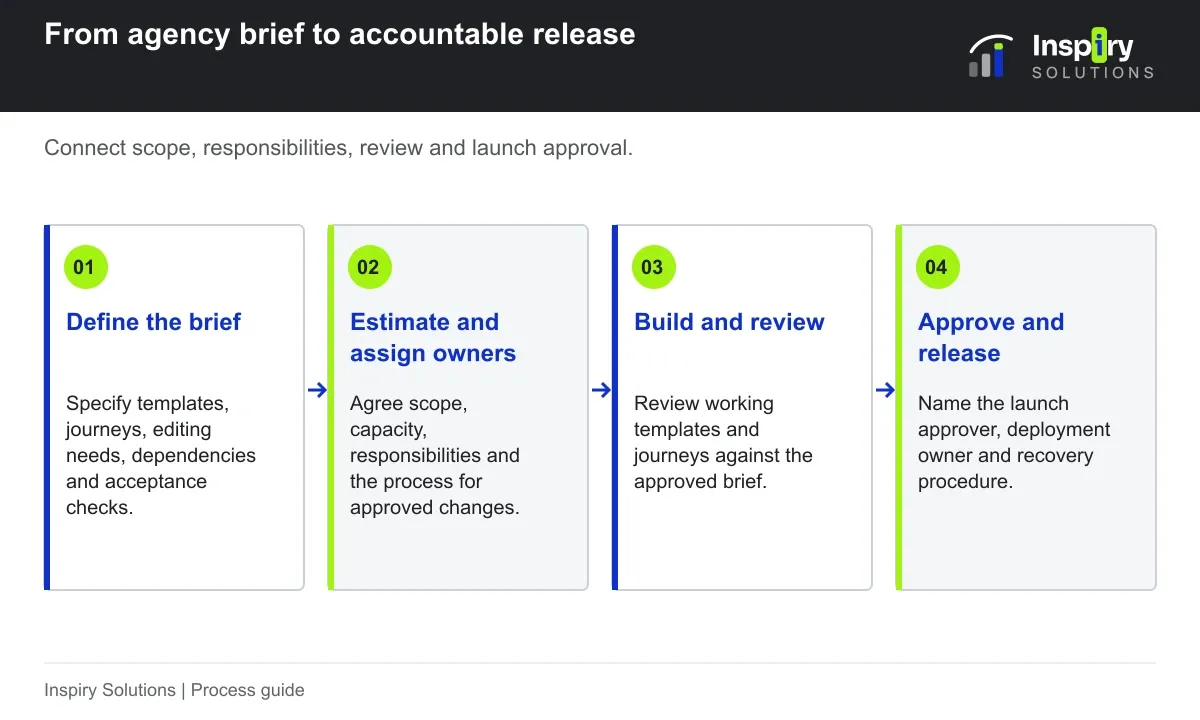
Use staging for white label WordPress review and agree a release process. Specify who backs up production, who deploys, who approves the launch and who can roll back. For a busy store, distinguish theme changes from database changes so deployment does not overwrite new orders.
Run launch checks after the public release, including real form delivery, analytics, payment settings and critical landing pages. Remove temporary indexing restrictions and verify that staging remains appropriately protected.
Handover should include editing instructions, dependency details, known limitations, recovery procedures and support contacts. Ask the agency team to perform a routine edit and locate the latest backup. This tests whether the handover is usable.
A partner offering WordPress development services should be able to explain its release and handover process in concrete terms before the agency commits to a long-term relationship.
9. Define support after launch
Separate white label WordPress defect correction from ongoing maintenance and enhancements. State when each begins, what is covered and how urgent incidents are handled. A general promise of support leaves both parties guessing when a client reports a problem.
Identify who handles WordPress updates, plugin compatibility, backups, security monitoring and performance regressions. Define the first responder and the escalation route. Do not sell a client an availability commitment your partner has not accepted.
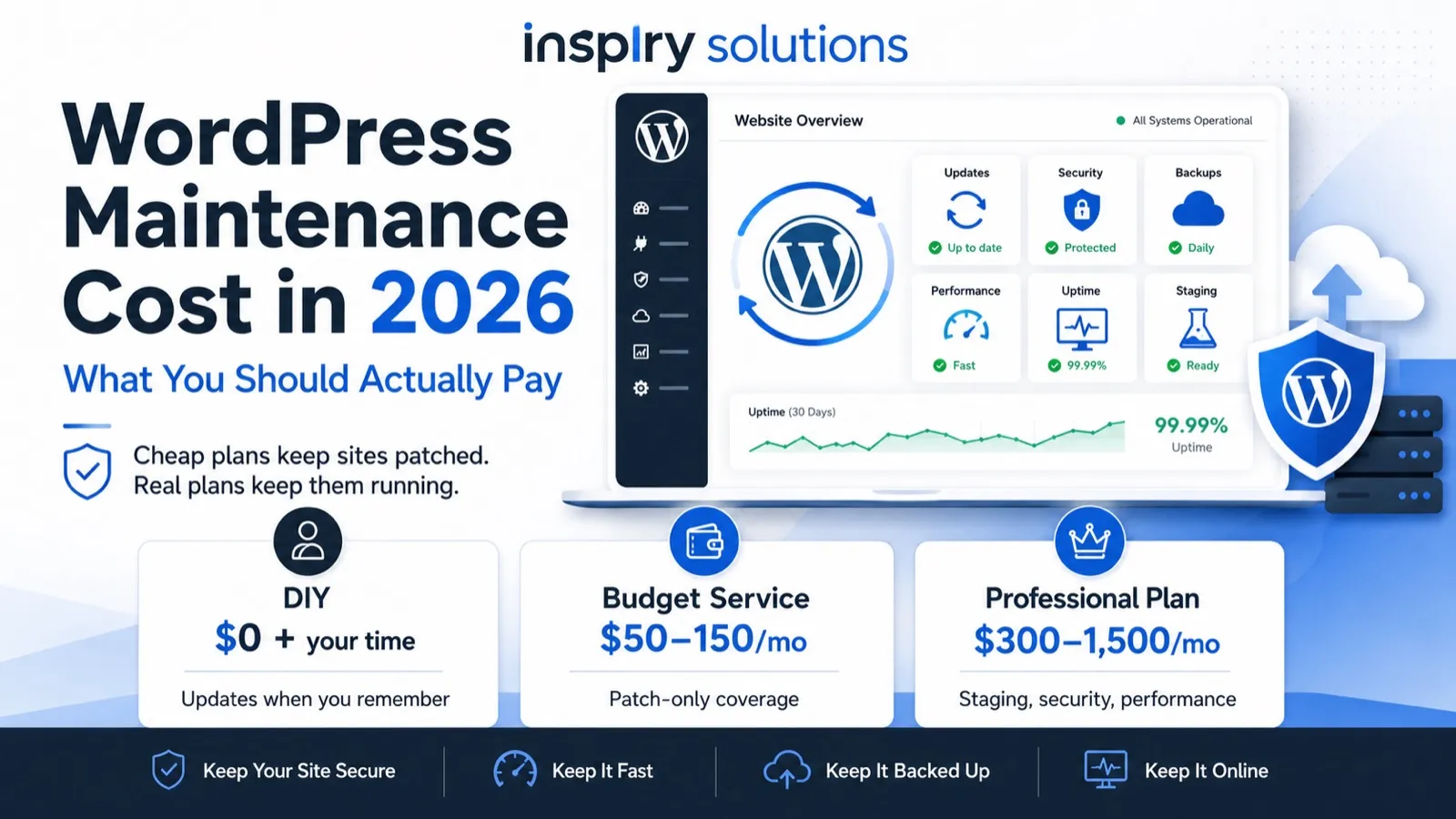
Agree how recurring work is authorised and reported. A care plan needs reserved time and access, not just a name. Use the WordPress maintenance cost guide to discuss those continuing responsibilities with clients.
Start with a representative pilot
Choose a bounded white label WordPress pilot that includes the editing, integration or review process you expect to repeat. Evaluate the partner’s questions, documentation, response to feedback and ability to resolve defects. A simple pilot is useful only if it tests the responsibilities that matter later.
After delivery, review scope changes, review cycles and handover quality together. Adjust the process before increasing capacity. Repeatable delivery depends on shared working habits as much as individual technical skill.
Frequently asked questions
What does white label development mean?
A white label WordPress delivery partner performs agreed development work that the agency presents within its own service. The agency normally manages the client relationship, with technical responsibilities defined between both parties.
Should the developer speak directly to clients?
It can help with technical discovery, but the agency should agree the purpose and boundaries. Define who can approve changes or make commitments before arranging those conversations.
Can a white label partner use Elementor?
Yes, if the brief allows it and the editing model suits the client. Agree component conventions, performance checks and licence ownership. The builder choice does not replace quality assurance.
How many revisions should be included?
Define review stages and what each permits rather than relying solely on a revision count. Correcting an agreed defect differs from approving a new design or adding functionality.
Should the agency receive the source code?
Yes, it should receive the material needed to maintain the commissioned work, subject to applicable licences. Repository access, documentation and deployment instructions make that handover practical.
Who is responsible for faults after launch?
The white label WordPress agreement should distinguish defects, platform changes, client edits and new requests. The agency needs a clear first-response process, even when the partner performs the technical fix.
Build the partnership around accountable delivery
White label WordPress development becomes reliable when scope, approvals, quality evidence and continuing ownership are explicit. Start with a representative pilot and refine the process together. That gives your agency a delivery partnership it can explain, manage and support as client demand changes.