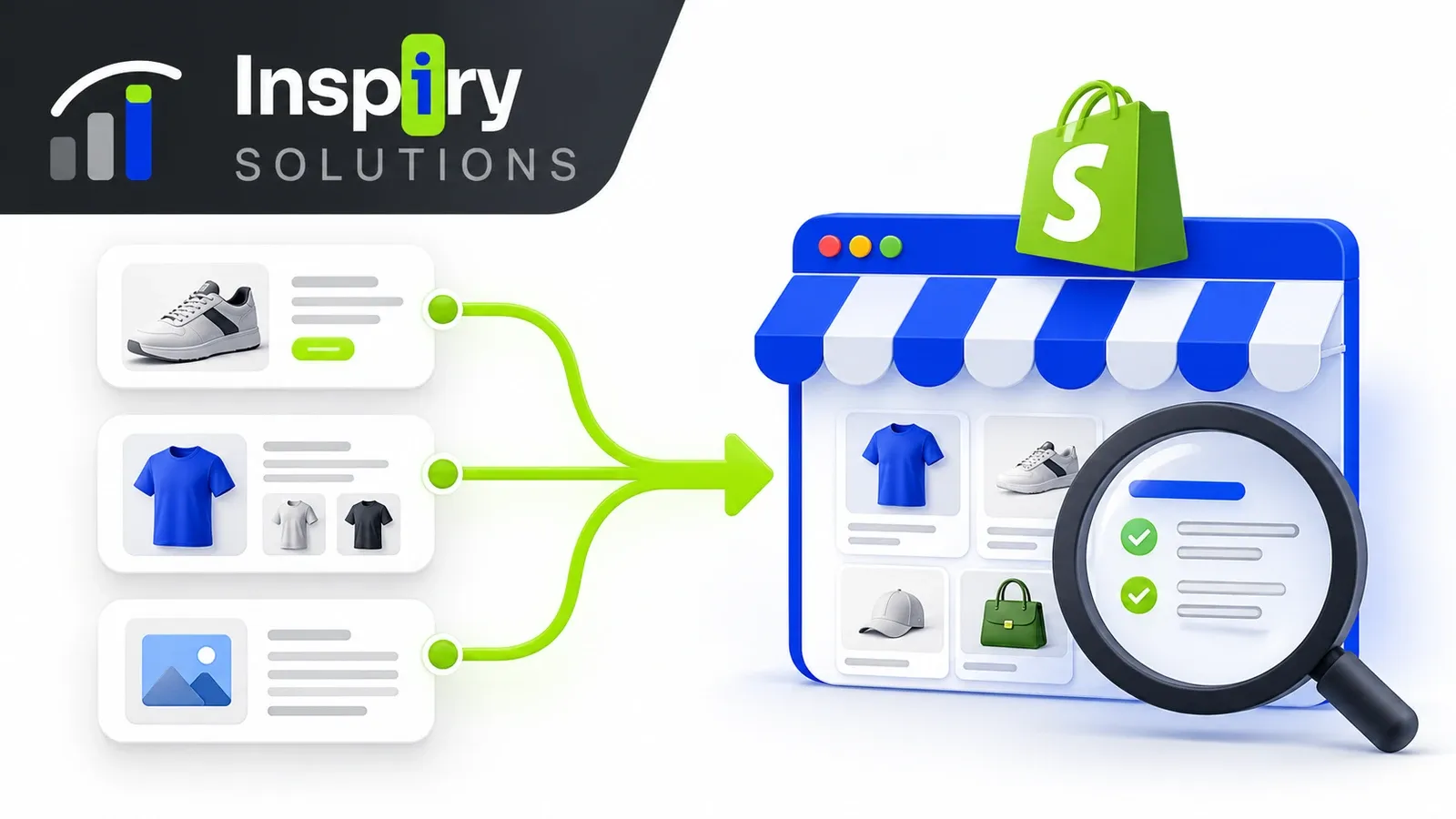
Shopify Markets SEO lets one Shopify store serve UK and US shoppers with local currencies, regional URLs and relevant content without needing separate stores. The safest approach is to choose your international URL structure before launch, configure GBP and USD pricing, keep important regional information accurate, and verify that Google can discover both versions. Shopify handles some international SEO settings automatically, including hreflang for supported market URLs, but you still need to check the output.
If you already sell in one country and want to reach the other, this guide explains which Shopify Markets settings affect search visibility, what to localise, and how to test your setup after launch.
Shopify Markets SEO: what the feature changes
Shopify Markets is Shopify’s system for managing selling experiences across countries and customer groups from one store.
For a merchant expanding between the UK and US, Shopify Markets can provide a useful starting point.
The Shopify international selling documentation explains the available tools for market configuration, local currencies, international domains, delivery and localisation.
The important distinction is that a market setting is not automatically an SEO improvement.
One store or separate stores?
A single Shopify store is usually the simpler starting point when the same business sells substantially the same products in both countries.
You can manage products, themes and core operations centrally while creating market-specific shopping experiences.
Separate stores may make sense when the UK and US businesses have independent teams, distinct catalogues, different operational requirements or substantially different brand strategies.
However, two stores introduce additional work around inventory, content, integrations, analytics and SEO.
What changes for shoppers and Google?
For shoppers, the visible differences may include prices, currencies, delivery availability, product terminology and regional policies.
For Google, the most important change is whether you create distinct, accessible URLs for each market.
A currency selector on one URL is not equivalent to having a UK page and a US page with separate addresses.
A Shopify UK and US store therefore needs decisions about both customer experience and discoverable page structure.
Domains, subdomains or subfolders
Your international URL structure determines how shoppers and search engines reach each market.
For Shopify Markets SEO, this decision should come before content localisation or a major advertising launch.
Google supports several approaches to international URL structure. Its URL structure guidance explains why clear, consistent addresses matter.
Market URL options
| Option | Example URL | Pros | Cons | Fits when |
|---|---|---|---|---|
| Subfolder on one domain | example.com/en-us/products/candle | Central management, shared domain, clear regional paths | Requires correct market configuration and regional links | One store serves both countries |
| Subdomain | us.example.com/products/candle | Distinct market identity without another root domain | Additional configuration and SEO monitoring | Markets need visibly separate sections |
| Separate country domains | example.co.uk and example.com | Strong local branding and country-specific addresses | Domain costs, more maintenance and link management | Established brands have distinct regional identities |
| Single market with currency conversion only | example.com/products/candle | Simplest initial setup, fewer URLs to manage | No distinct regional URLs for normal hreflang targeting | Testing international demand without separate SEO pages |
These are structural options, not a ranking order.
For most smaller merchants using one Shopify store, subfolders offer a practical balance between administration and international SEO.
With Shopify international domains, the exact URL format depends on how your domains and language settings are configured.
Consider changes before migration
If you currently use a single .com domain and plan to introduce .co.uk, map your existing URLs before switching.
A change to an established page address should have a relevant permanent redirect where the old URL is being replaced.
Use the international checks during a store move to plan a structural change rather than treating it as a domain setting alone.
One easily missed issue is whether your market-specific product pages actually resolve to the intended regional URL.
If you need help configuring the structure, our Shopify setup for UK and US selling service covers store development and technical implementation.
The objective is to choose a structure you can maintain, not the one that looks most international.
Currency, prices and tax display
Shopify multiple currencies functionality allows merchants to present local pricing where the store’s payment and market configuration supports it.
UK shoppers generally expect GBP, while US shoppers expect USD.
Currency configuration also influences price consistency across product pages, feeds, structured data and checkout.
Automatic conversion or fixed market prices?
Automatic currency conversion is useful when entering a second market without maintaining separate price lists.
For example, a UK merchant may start with GBP base prices and allow supported conversion settings to generate USD display prices.
The limitation is commercial rather than purely technical.
Fixed market prices give you greater control over how products are priced locally, where your Shopify configuration supports this.
Review these decisions before launch:
- Whether local currency checkout is supported by your payment setup.
- Whether automatic conversion or fixed regional pricing is appropriate.
- How rounding rules affect displayed amounts.
- Whether discounts and promotional prices behave correctly.
- Whether delivery costs and tax treatment remain accurate.
Do not assume that selecting USD in the admin means every US customer will complete checkout in USD.
VAT in the UK and sales tax in the US
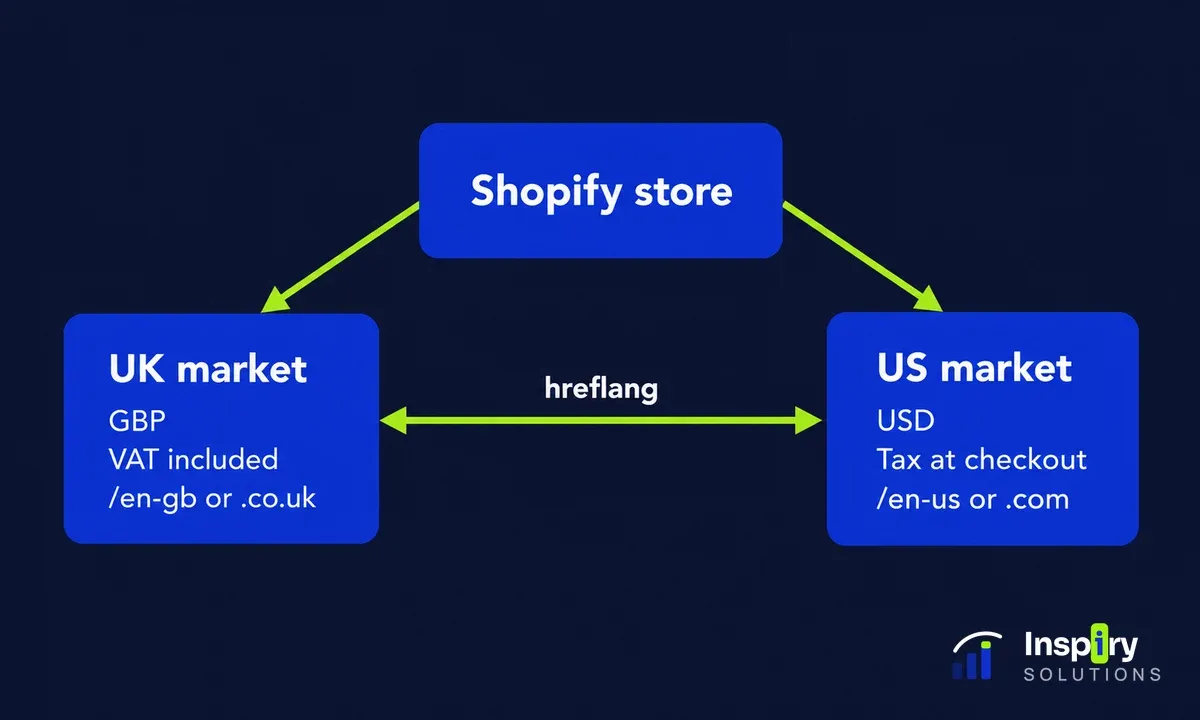
UK consumer-facing prices generally need to reflect applicable VAT-inclusive pricing requirements.
In the US, sales tax commonly appears separately during checkout, with the treatment depending on the customer’s jurisdiction and applicable rules.
The same product may therefore show a VAT-inclusive GBP amount to a UK shopper and a USD amount with applicable sales tax calculated later for a US shopper.
Check the product page, cart and checkout, and confirm the current tax rules with your accountant or tax adviser, as obligations depend on your business and where you sell.
Keep structured data consistent
Product structured data is machine-readable information that helps search engines understand details such as product offers, availability, price and currency.
Your regional page’s visible price should agree with its product markup and relevant offer details.
If a UK page displays GBP but its structured data advertises USD without a clearly corresponding offer, investigate the mismatch.
Google’s product structured data documentation explains the supported product and offer properties.
Currency accuracy is part of Shopify Markets SEO, not merely a checkout preference.
UK and US content: when to make pages different
A UK and US store does not need two completely rewritten product catalogues.
Both audiences primarily use English, and many product descriptions will be equally relevant.
Instead, prioritise information that changes buying decisions.
Localise information customers actually use
For UK and US shoppers, the most useful differences often concern:
- Product spelling and familiar search terminology.
- Measurements, clothing sizes and product dimensions.
- Delivery destinations, carriers and estimated delivery conditions.
- Returns addresses, timeframes and applicable consumer rights.
- Duties, import charges and who is responsible for them.
- Availability, promotions and regional product restrictions.
British shoppers may search for “trainers”, while American customers may be more familiar with “sneakers”.
Likewise, clothing or footwear sizing should not be copied across markets without checking the correct conversion and product-specific fit.
Similar pages are not automatically a problem
Very similar UK and US product pages are normal for international ecommerce.
Hreflang helps Google understand that these URLs are intended for different regional audiences.
However, canonical tags and hreflang serve different purposes.
A canonical tag indicates the preferred URL among duplicates or closely related pages.
If a regional page canonicalises to another country unnecessarily, Google may not treat it as an independently indexable alternative.
Review duplicate Shopify URLs and canonicals before changing canonical output across your market URLs.
Localise genuine differences rather than manufacturing duplicate descriptions solely to create text variation.
Build trust with regional policies
Delivery and returns information deserves particular attention.
A US visitor should not need to interpret UK-only shipping conditions to understand whether an order is available to them.
Where relevant, explain dispatch location, delivery coverage, duties responsibility and returns arrangements.
Link market-specific policies from the appropriate regional pages.
These changes support conversion and reduce confusion, even though they do not guarantee higher search rankings.
Hreflang and how Shopify outputs it
Hreflang is an annotation telling Google that different URLs contain language or regional versions of equivalent content.
For UK and US English pages, the relevant language-region codes are normally en-GB and en-US.
Google’s documentation on regional page alternatives explains how these annotations help search engines choose a suitable version.
For a more focused explanation, read our guide to hreflang for UK and US audiences.
Hreflang does not directly improve a page’s ranking position.
What Shopify normally handles
Shopify adds hreflang for supported market domains and subfolders that it manages, outputs it through the theme’s header, and keeps it in step with each page’s canonical URL.
However, the presence of a Shopify Markets configuration does not prove every product and collection has correct output.
Themes, custom Liquid modifications, SEO applications and incomplete market configurations can introduce missing, duplicated or inconsistent annotations.
Open an actual regional product page, choose View Page Source, and search for hreflang.
For a published pair of equivalent pages, expect references to the relevant UK and US addresses, including the page’s own regional version.
Then repeat the inspection on the corresponding page in the other country.
Reciprocal links and x-default
Google expects regional alternatives to reference each other.
If the UK page identifies the US version but the US page does not identify the UK version, the relationship may be ignored.
Both annotations should also use complete, accessible HTTPS URLs rather than incomplete paths.
An x-default annotation may be appropriate when you have a general landing page or country selector that serves users not covered by your regional targeting.
Do not point every product’s x-default to the home page merely to fill a field.
Before adding custom hreflang code, inspect Shopify’s existing output.
Redirects and geolocation
Geolocation uses signals such as a visitor’s IP address to estimate their country.
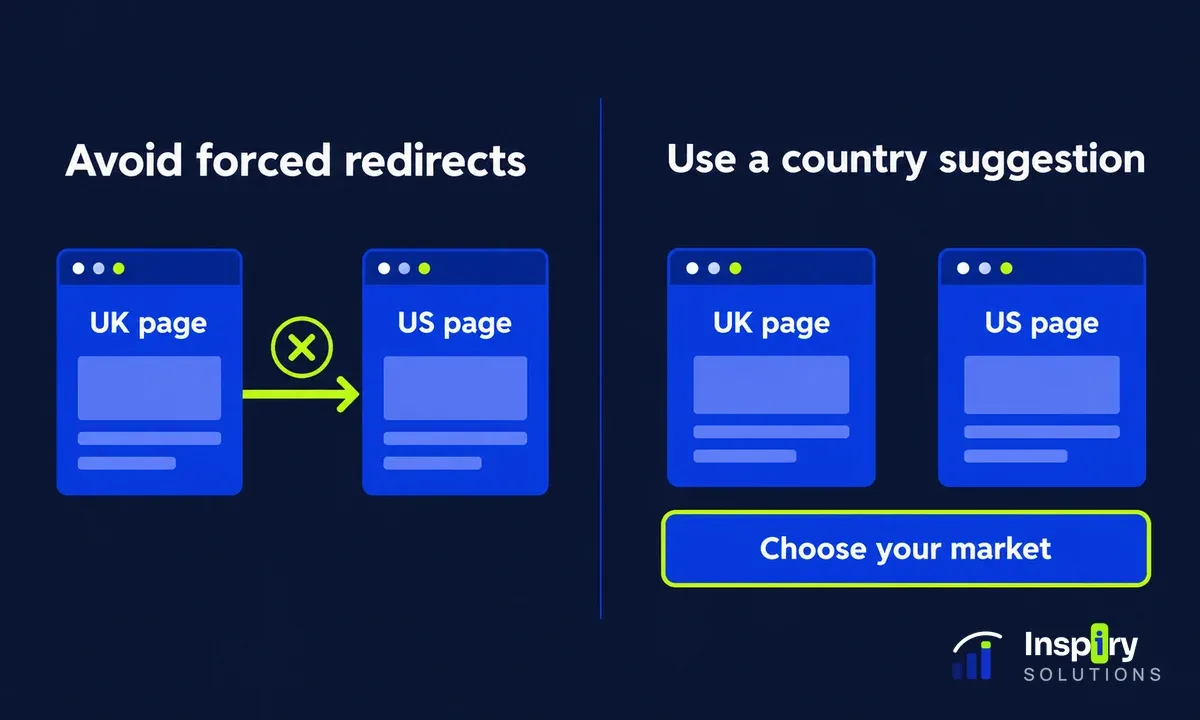
That information can help suggest an appropriate storefront, but forced country redirects can interfere with search engine discovery.
Googlebot commonly crawls from US IP addresses, so a forced redirect can stop it reaching the UK version. Shopify’s own help notes that markets can redirect visitors by IP address and browser language, so review those redirection settings and any geolocation apps before launch.
Prefer suggestions over forced routing
A country selector or suggestion banner gives shoppers a clear choice.
For example, a visitor browsing the UK page from America could see a message offering the US store with USD pricing.
Both versions should stay accessible by direct URL, including to search engine crawlers.
An automatic redirect might seem convenient for users, but it becomes risky when it prevents crawlers or customers from reaching the version they requested.
Hypothetical example: A UK candle brand adds a US market using an /en-us/ subfolder with USD prices.
The original store has a geolocation application that redirects all visitors with US IP addresses away from UK product pages.
Because Googlebot commonly crawls from US addresses, it can also encounter this redirect when attempting to inspect the UK versions.
The merchant removes the forced redirect and replaces it with a country suggestion banner.
They then check that both the UK and US product URLs return accessible pages, contain appropriate hreflang annotations and can be indexed independently.
This is a hypothetical example, not a client result or a prediction of traffic improvements.
The important lesson is that market selection should not prevent Google from discovering market pages.
Checks after launching a new market
A launch is not complete when the currency selector works.
The first weeks should include technical checks covering international URL access, indexing, regional selection and actual purchasing conditions.
The following four Shopify Markets SEO checks form a repeatable process.
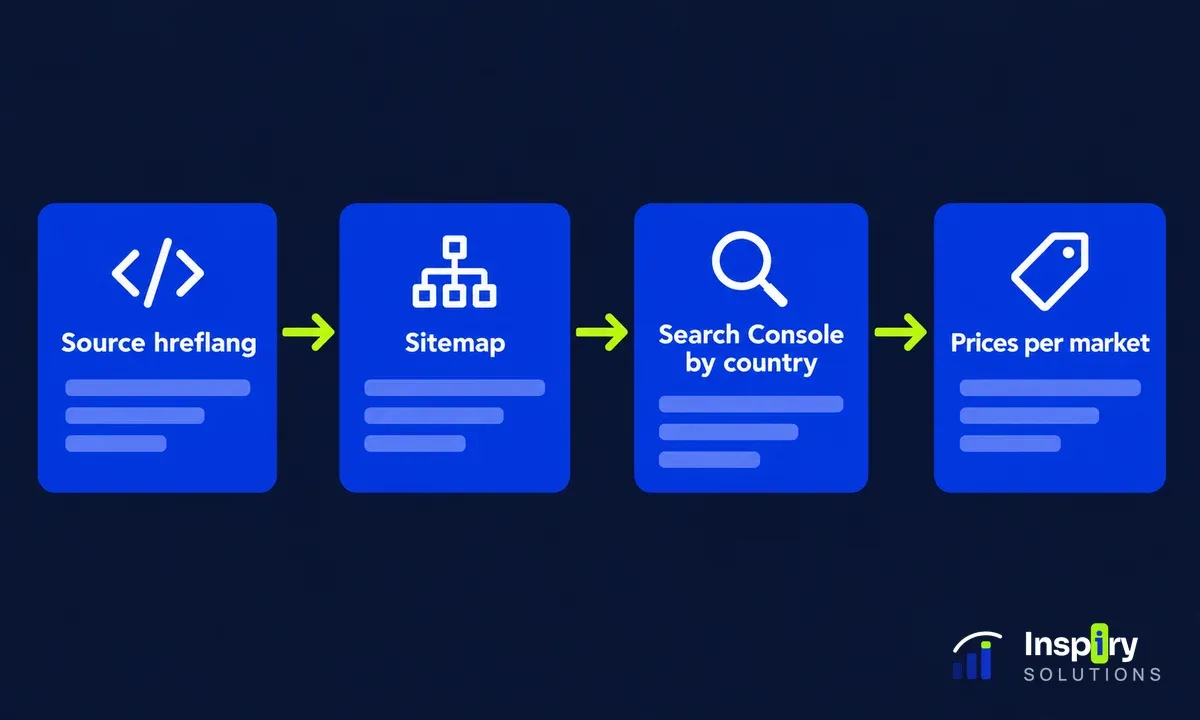
1. Page source shows hreflang for both versions
Choose a representative product available in both countries.
Open its UK URL and US URL separately.
Verify that each page identifies itself and the corresponding regional alternative using the intended language-region codes.
Check that the destination URLs are complete, publicly accessible and point to the equivalent product rather than another page.
If annotations are missing, inspect market publication status, theme customisations and installed applications before inserting new code.
Repeat the check on a collection and the home page.
2. Both versions are in the sitemap and indexable
Open the store’s XML sitemap and inspect its relevant sitemap entries or referenced sitemap files.
Look for the UK and US URLs that should be discoverable.
Then inspect both URLs using Google Search Console.
Check for a successful page response, accidental noindex directives, blocked crawling and inappropriate canonical destinations.
A sitemap entry does not guarantee indexing, and absence from a sitemap does not automatically mean a page cannot be indexed.
If the intended regional page remains excluded, investigate why a page version may not be indexed rather than submitting it repeatedly without diagnosing the cause.
3. Search Console shows the right version per country
Use Google Search Console’s Performance report to review search activity for your regional URLs.
Filter by country, then examine which pages receive impressions and clicks from the UK and US.
Check whether UK searches commonly surface the intended UK version and whether US searches surface the intended US version.
Use the URL Inspection tool for individual page-level indexing information.
Country reports are diagnostic evidence, not proof that Google will always show one particular URL to every user.
Newly launched pages may have little data, so avoid drawing conclusions from an empty or very small reporting window.
Record a baseline, review it over the following weeks, and investigate persistent mismatches.
4. Prices, currency and tax display are right in each market
Test the shopping experience independently in the UK and US markets.
Check product pages, collections, carts, checkout and relevant promotional pages.
Confirm GBP appears where intended for UK customers and USD where intended for US customers.
Verify VAT presentation, relevant sales tax calculations, discounts, delivery charges and any duties notices.
Inspect product structured data to confirm that the appropriate price and currency are represented.
If your setup uses market-specific prices, compare selected products against the configured values rather than relying on exchange-rate assumptions.
Repeat these checks after meaningful theme changes, pricing configuration changes or installation of applications affecting localisation.
Keep a short record of the URLs checked, defects found, changes made and verification results.
Common questions
Does Shopify add hreflang automatically?
Yes. Shopify adds hreflang for market domains and subfolders it manages, provided the relevant market setup supports those regional URLs. Themes or applications can interfere with the output, so inspect the page source on both versions. Hreflang helps Google choose the appropriate regional page; it does not rank pages by itself.
Subfolders or separate domains for UK and US?
Subfolders are usually simpler to manage because both markets remain under one domain. Separate domains can make sense for established local brands that need distinct identities, but they require additional configuration and maintenance. Either structure can work when regional URLs, hreflang and internal links are configured correctly. Choose based on operational needs rather than assuming one structure guarantees rankings.
Is UK and US content on Shopify duplicate content?
Very similar pages for different countries are normal, especially when both audiences use English. Hreflang tells Google that the URLs are regional alternatives. You should still localise prices, spelling, sizes, delivery information and policies where those details affect shoppers. Check canonical tags too, because inappropriate canonicalisation can undermine the intended regional setup.
Should I redirect visitors by country?
Avoid forced redirects based only on IP address. Google’s crawlers commonly operate from the US and may struggle to reach a UK version if every request is redirected. A suggestion banner or visible country selector is generally safer because visitors can choose their market while both URLs remain accessible.
Start with one market done properly
Expanding a Shopify store from the UK to the US, or the other way around, does not require duplicating the entire business website.
Start with the existing market and configure the second market around a manageable set of products and collections, where your catalogue and market publishing capabilities permit that approach.
Confirm the URL structure first.
Run the four checks before promoting the new regional URLs widely.
Once the initial pages behave correctly, expand the catalogue and repeat the same verification process.
Shopify Markets SEO is most useful when international configuration, customer experience and technical search signals agree.
For broader technical coverage, use the wider Shopify SEO checks alongside your international launch review.
If you are adding a UK or US market, send your store URL for a free audit, or ask about Shopify development to set up and check the new market for you.